
Bắc Môn – A witness to the history of Thăng Long
Bắc Môn (Northern Gate) – The Only Surviving City Gate of Nguyễn-Dynasty Hanoi
Standing amid the old trees along Phan Đình Phùng Street, Bắc Môn (Northern Gate) has survived for more than two centuries as a remarkable witness to the history of Thăng Long–Hanoi. It is the only surviving city gate of Hanoi’s Nguyễn-Dynasty citadel, and one of the most significant monuments within the Central Sector of the Imperial Citadel of Thăng Long, a UNESCO World Heritage Site inscribed in 2010.
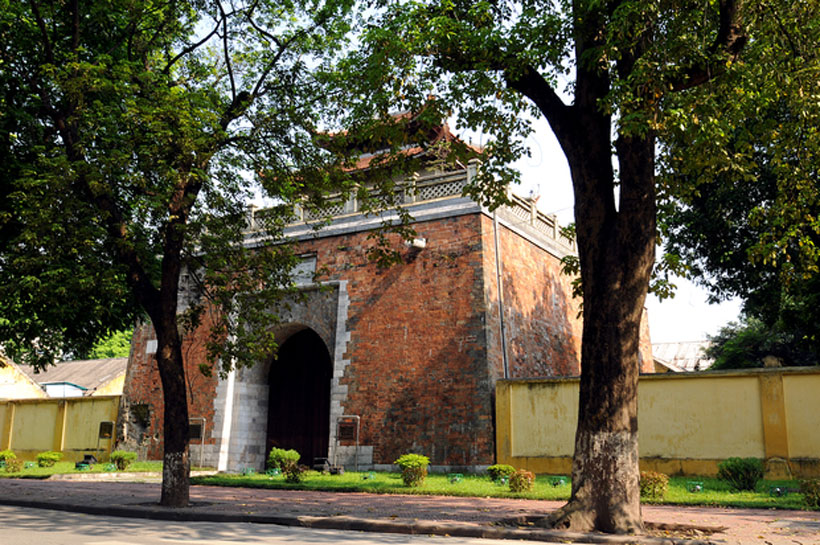
Beyond its architectural and military significance, Bắc Môn is closely associated with the battles to defend Hanoi against French colonial forces in the late 19th century. The gate preserves visible traces of those battles and is also a memorial site dedicated to two heroic governors of Hanoi, Nguyễn Tri Phương and Hoàng Diệu.
Today, Bắc Môn is an important stop for visitors exploring the Imperial Citadel of Thăng Long, offering a glimpse into the history, architecture and indomitable spirit of Hanoi.
Where is Bắc Môn located?
Bắc Môn is located on Phan Đình Phùng Street, in Ba Đình District, Hanoi. It was the northern gate of the Hanoi Citadel under the Nguyễn Dynasty and served as an important entrance and defensive position on the northern side of the citadel.
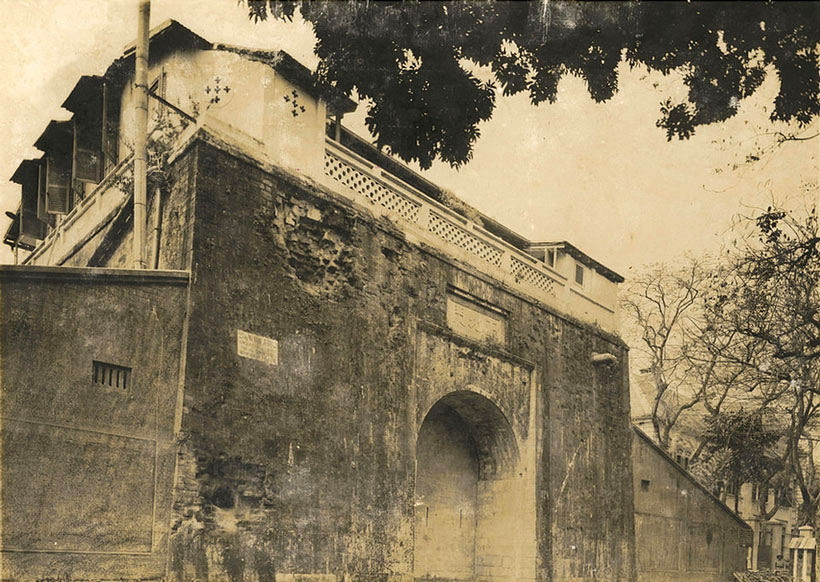
Within the historical layout of the Imperial Citadel, Bắc Môn lies beyond Hậu Lâu, along the extended central axis connecting Hanoi Flag Tower, Đoan Môn and Kính Thiên Palace. Although the surrounding urban landscape has changed considerably, Bắc Môn remains in its original location within the former citadel, providing valuable evidence of the defensive system of early 19th-century Hanoi.
History of Bắc Môn
After the reunification of Vietnam, Emperor Gia Long ordered the construction of the Hanoi Citadel in 1805, following the Vauban-style military fortification system then popular in Europe. Bắc Môn was built on the foundations of the northern gate of the former Imperial Citadel of Thăng Long under the Lê Dynasty.
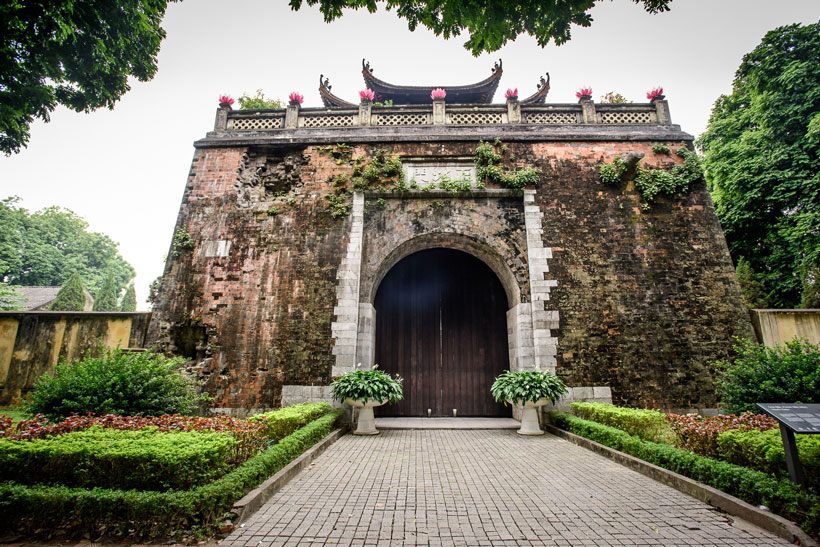
Unlike many other structures that were demolished during the French colonial period, Bắc Môn fortunately survived largely intact. It therefore represents a particularly valuable monument for the study of Vietnamese history and military architecture.
Archaeological evidence beneath the present-day gate has also revealed layers of earlier structures dating back to previous dynasties, including the Lý, Trần and Lê periods. These remains demonstrate the continuity of the political and cultural center of Thăng Long for more than a thousand years.
The distinctive architecture of Bắc Môn
Bắc Môn was designed as a gate pavilion (vọng lâu), consisting of two principal sections: the fortified gate below and a watchtower above. The structure is approximately 8.71 meters high, 17.08 meters wide, with walls nearly 2.5 meters thick. The massive structure was built primarily of brick and stone.
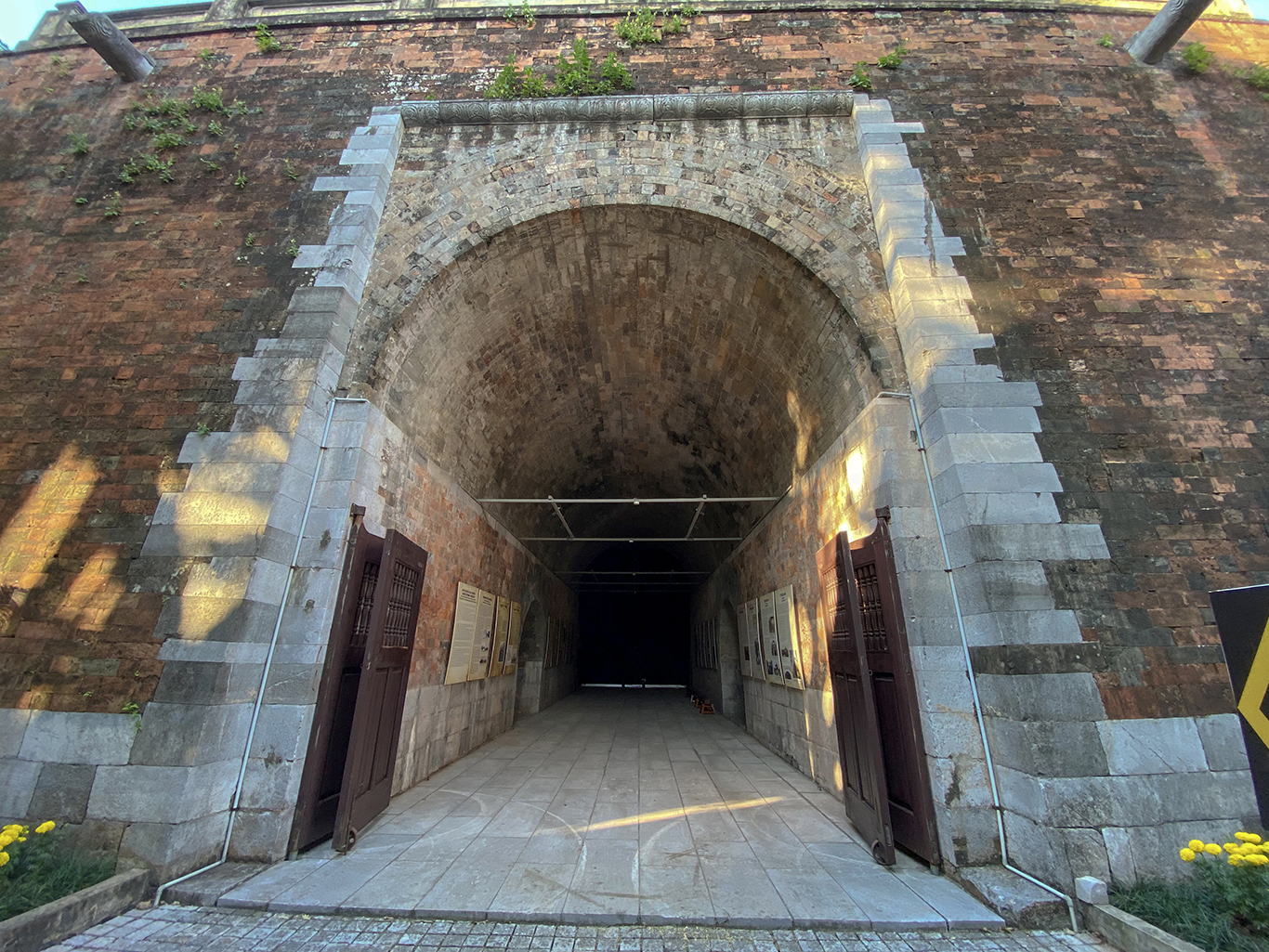
Large stone blocks were used for the foundations, while the walls were constructed with large traditional bricks. The gateway features a vaulted arch, built using an alternating arrangement of horizontally and vertically laid bricks, creating a highly durable load-bearing structure.
Above the gate is a stone plaque engraved with three Chinese characters, “Chính Bắc Môn” (正北門), meaning “Northern Gate,” framed by decorative floral motifs.
The watchtower above Bắc Môn
One of the most distinctive features of Bắc Môn is the watchtower rising above the city gate. The upper structure was built with a wooden frame in the double-roof, eight-roof style, covered with traditional Vietnamese tiles and fitted with openings on all four sides.
From the watchtower, soldiers and guards could survey the areas both inside and outside the citadel, allowing them to detect movements or approaching enemy forces.
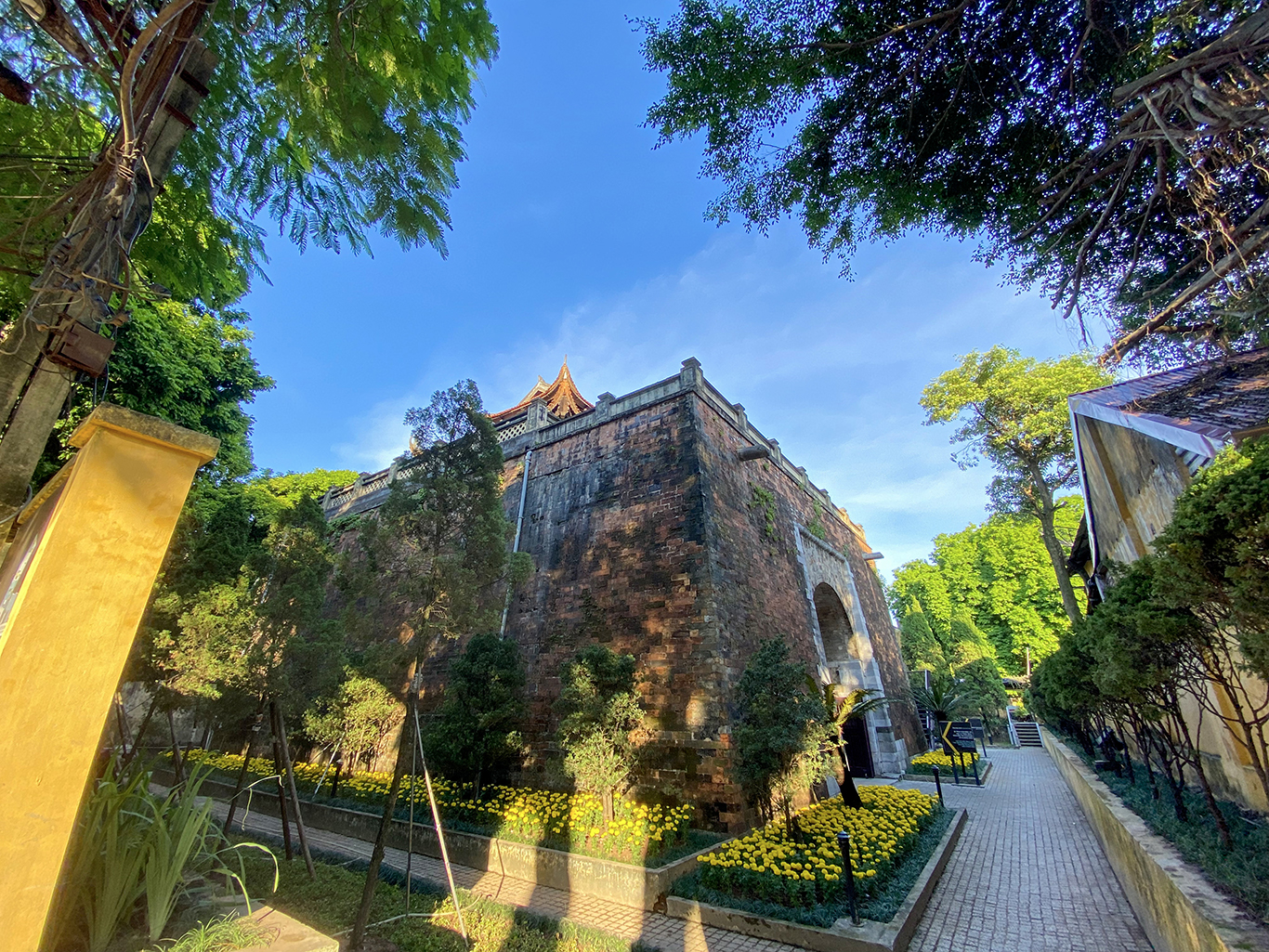
Because of its strategic vantage point, the French military continued to use Bắc Môn as a watch post after taking control of Hanoi.
Today, part of the watchtower has been reconstructed, helping visitors better understand the original appearance and function of the historic structure.
Traces of the battles to defend Hanoi
Bắc Môn is not merely an architectural monument; it is also a tangible witness to the battles fought to defend Hanoi against French colonial forces.
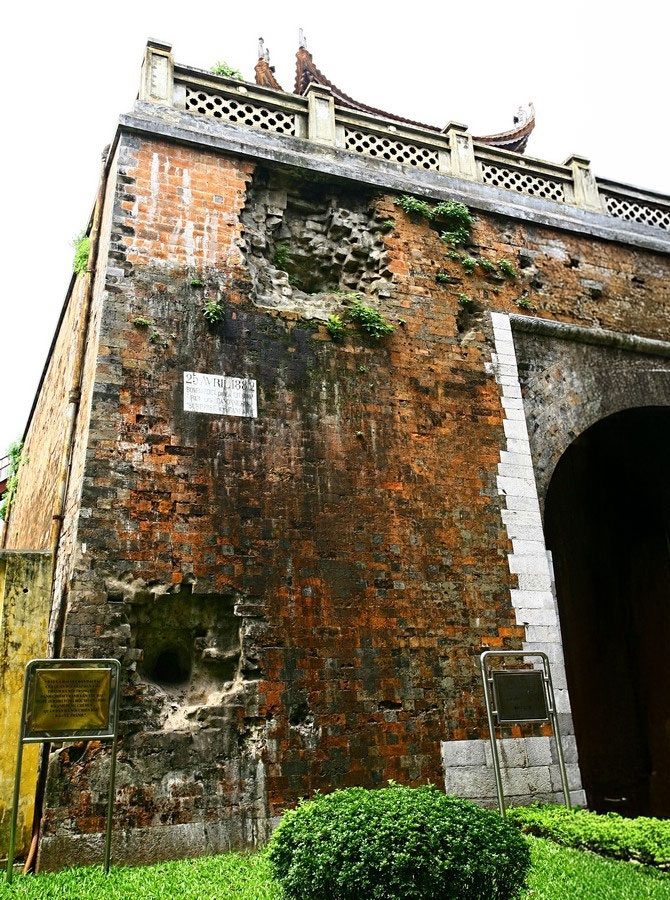
On the outer wall of the gate, visitors can still see two cannonball impact marks. These are believed to have been caused by French artillery during the attack on the Hanoi Citadel in 1882, when French forces launched an assault from the Red River.
These marks remain powerful physical evidence of a turbulent period in Vietnamese history, while also recalling the courage and determination of those who defended the city.
A memorial to two heroic governors of Hanoi
Inside Bắc Môn is a memorial space dedicated to two governors of Hanoi:
- Nguyễn Tri Phương – the military commander who led Vietnamese forces in defending the Hanoi Citadel during the French attack of 1873.
- Hoàng Diệu – the governor of Hanoi who took his own life in 1882 after the citadel fell, choosing death rather than surrender.
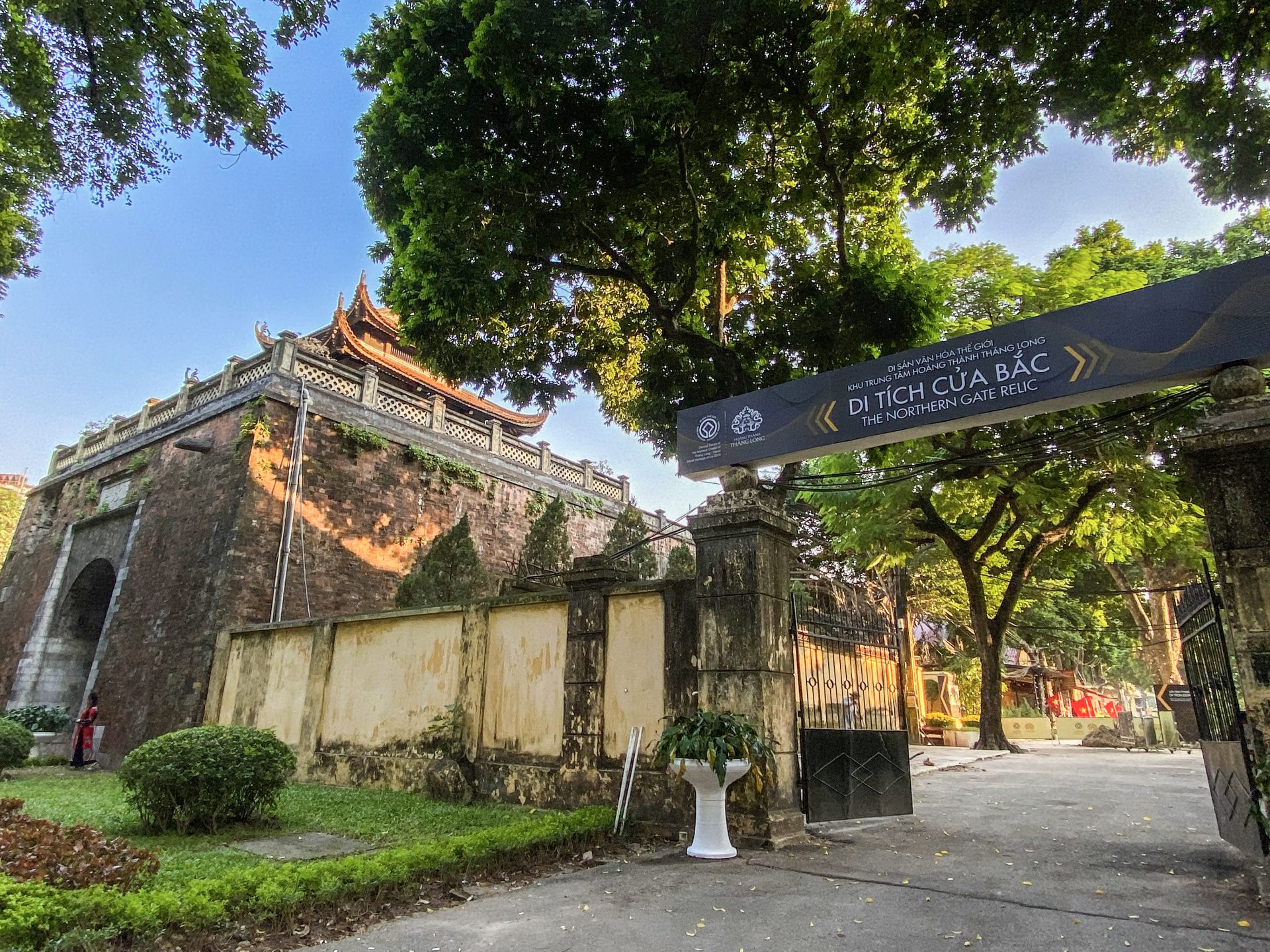
Today, local residents and visitors regularly come to Bắc Môn to pay their respects to the two patriotic figures and commemorate their sacrifices for the country.
Two major streets flanking the former citadel are also named after Nguyễn Tri Phương and Hoàng Diệu, serving as a lasting tribute from Hanoi to these historic figures.
Archaeological discoveries at Bắc Môn
Bắc Môn is significant not only for its architecture but also for its archaeological value.
In 1998, archaeological excavations around Bắc Môn uncovered numerous architectural remains at depths of approximately 1.6 to more than 2 meters below the present ground level.
Among the discoveries were sections of walls constructed from stone and large bricks dating to the Lê period. These remains demonstrate that beneath the Nguyễn-Dynasty structures lie successive archaeological layers belonging to earlier periods.
Such discoveries provide further evidence of the remarkable continuity of the Thăng Long imperial center throughout more than 1,300 years of history.
Bắc Môn on the Imperial Citadel of Thăng Long visitor route
Today, Bắc Môn is an important attraction within the Central Sector of the Imperial Citadel of Thăng Long.
After visiting Hanoi Flag Tower, Đoan Môn, Kính Thiên Palace and Hậu Lâu, visitors can continue to Bắc Môn to explore the defensive system of the Nguyễn-Dynasty Hanoi Citadel and learn about the historical events associated with the resistance against French colonial forces.
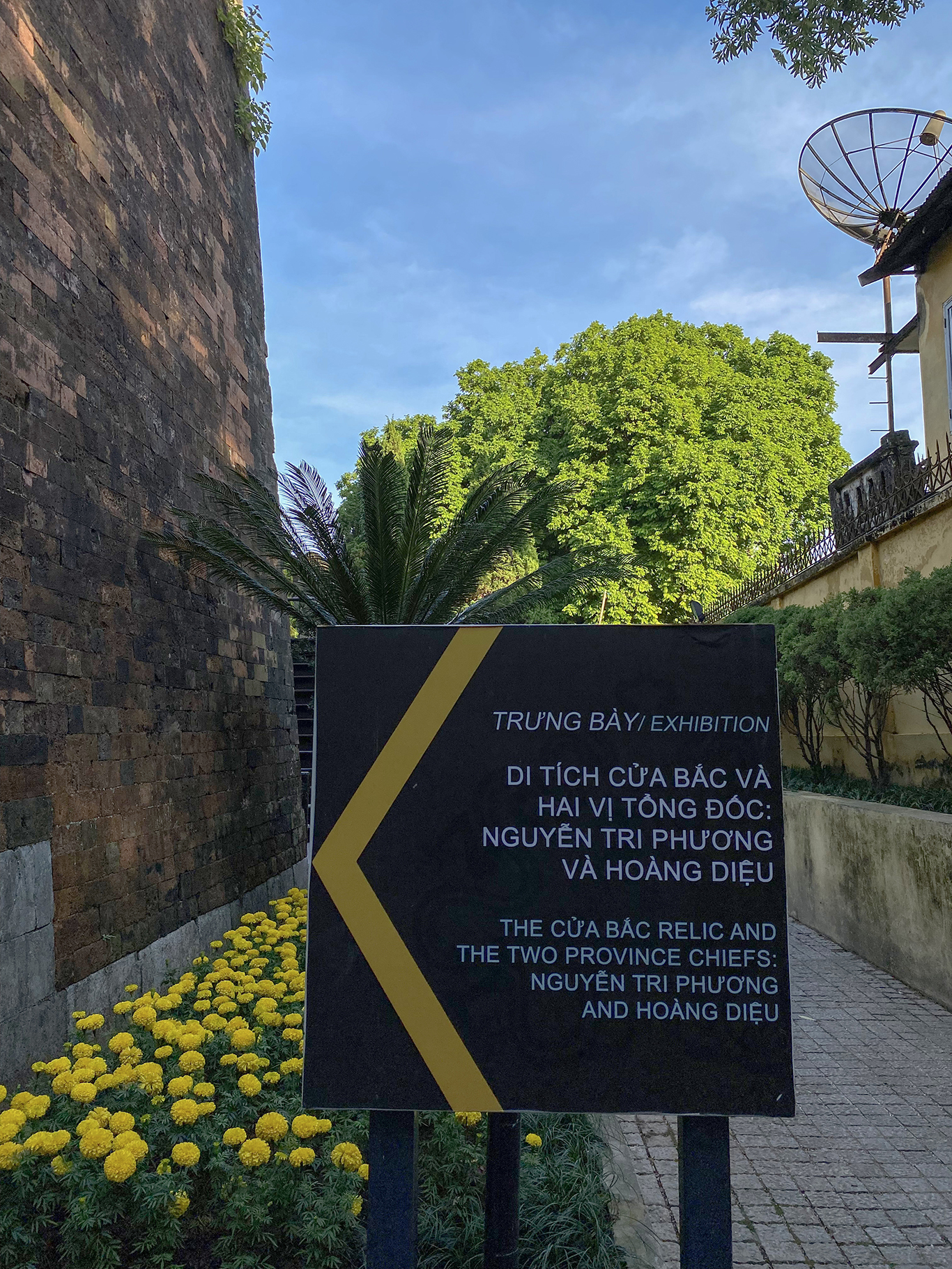
Standing on the watchtower, visitors can gain a better sense of the scale of the former Hanoi Citadel and appreciate the strategic importance of Bắc Môn within its defensive system.
The historical and cultural significance of Bắc Môn
After more than two centuries, Bắc Môn continues to stand proudly in the heart of Hanoi as a symbol of resilience and patriotism.
It is not only the only surviving city gate of the Nguyễn-Dynasty Hanoi Citadel, but also a valuable repository of military, architectural and archaeological heritage.
Every brick, every cannonball mark on its walls and every step leading to the watchtower tells a story of a turbulent yet heroic chapter in Vietnam’s history.
Together with other surviving monuments and archaeological remains, Bắc Môn contributes to the outstanding universal value of the Imperial Citadel of Thăng Long – Hanoi, a UNESCO World Heritage Site, helping preserve the historical memory of Thăng Long–Hanoi for future generations.
NTT