
Square decorative brick with lotus and crocodile motifs amidst waves
The square decorative brick featuring lotus and crocodile motifs amidst waves is a rare type of terracotta architectural material dating from the Đại La period (7th–9th centuries).
The image of a crocodile gracefully swimming among waves, combined with lotus motifs – a distinctive artistic symbol of the period – creates a vivid and harmonious decorative composition.
This is not merely a construction brick, but also an artifact that reflects the advanced techniques of pottery and building-material production, as well as the distinctive cultural life and natural environment of the ancient Đại La citadel.
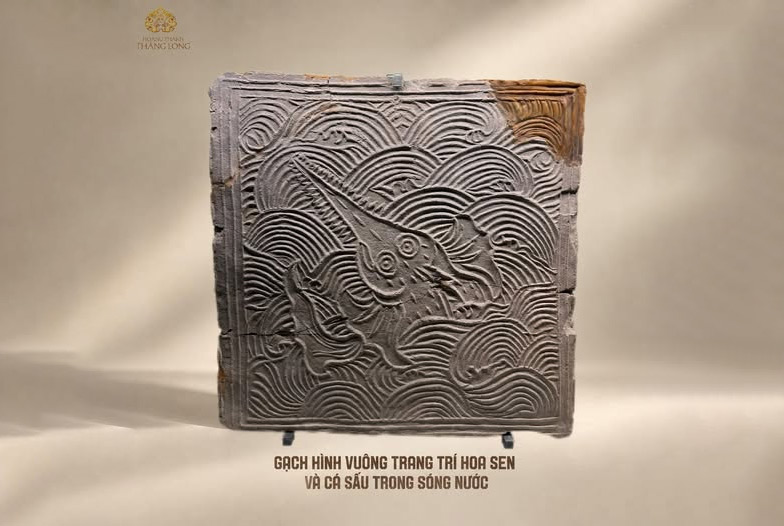
In particular, the appearance of the crocodile motif on the decorative brick reveals the close relationship between artistic expression and the natural world of the time. The flowing lines of the waves, the lotus blossoms, and the form of the crocodile are rendered with remarkable liveliness, creating a decorative composition that is both aesthetically refined and rich in symbolic meaning.
Through seemingly modest artifacts such as this brick, the appearance of Đại La more than a thousand years ago is gradually brought back to life – an urban center with a rich cultural life, advanced craftsmanship, and the convergence of diverse artistic influences from across the region.
Today, Đại La-period decorative bricks are valuable sources of evidence for researchers studying the architecture, art, and daily life of the people of ancient Thăng Long. They also contribute to a deeper understanding of the outstanding universal and historical values of the Imperial Citadel of Thăng Long.
NTT