The royal banquet ceremony – A ritual honoring successful candidates
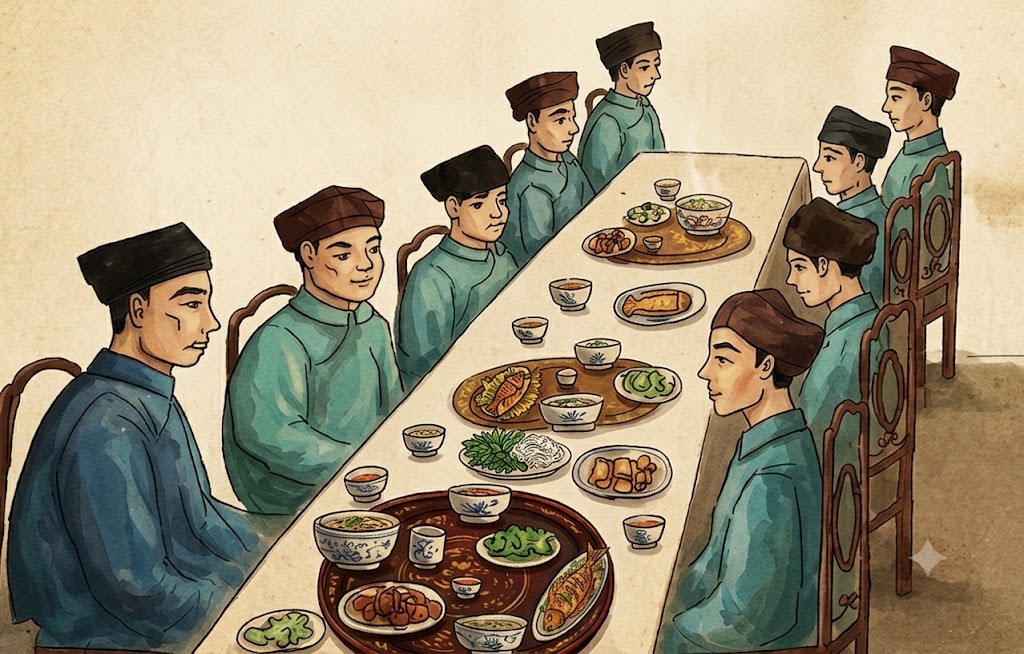
The Royal Banquet Ceremony (or the Ceremony of Bestowing a Royal Banquet) was a special ritual in the examination system of feudal Vietnam. It demonstrated the emperor’s exceptional favor, honor, and highest recognition bestowed upon successful candidates who had passed the highest-level imperial examinations, including Tiến sĩ (Doctoral laureates), Trạng nguyên (First Laureate), Bảng nhãn (Second Laureate), and Thám hoa (Third Laureate).
Below are some of the distinctive features of this ceremony:
1. Significance of the Royal Banquet Ceremony
- Honoring and employing talented individuals: The ceremony affirmed the court’s recognition of the important role of scholars and intellectuals. Successful candidates were regarded as the “vital essence of the nation” and as capable servants who would contribute to the well-being and prosperity of the country.
- Strengthening the bond between ruler and subjects: The banquet bestowed by the emperor provided the successful candidates with an early opportunity to formally pay homage to the sovereign and establish a relationship based on loyalty and the traditional bond between ruler and subject.
- Encouraging aspiring scholars: The solemn and prestigious ceremony inspired great pride and served as an incentive for scholars throughout the country to pursue their studies and strive for similar honors.
2. The Ceremony and Its Procedures during the Lê and Nguyễn Dynasties
The Royal Banquet Ceremony was generally held shortly after the Ceremony of Proclaiming the Successful Candidates, when the names of those who had passed the examinations were announced, and the Ceremony of Bestowing Caps and Robes.
- Venue: The banquet was usually held at prestigious locations within the imperial citadel, such as Cần Chánh Palace or Duyệt Thị Đường Theatre during the Nguyễn Dynasty, as well as the royal gardens and palace courtyards.
- Participants: In addition to the successful candidates, the banquet was attended by high-ranking court officials and examination officials, including chief examiners and supervising officials, who joined in celebrating the scholars’ achievements.
- Rituals:
- The successful candidates, dressed formally in the caps and robes bestowed by the emperor, performed ritual bows to express their gratitude for the imperial favor.
- The emperor might personally attend the ceremony or appoint senior officials to represent him in bestowing wine and flowers, including silver or silk flowers, which were placed on the scholars’ caps.
- During the banquet, the successful candidates often composed and recited poetry expressing their aspirations, praising the virtues of the court, and expressing their gratitude for the emperor’s favor.
3. Special Honors Accompanying the Ceremony
In addition to the Royal Banquet Ceremony, successful candidates received a series of prestigious honors that represented the highest aspirations of scholars:
- The Flower-Bestowing Ceremony: Each successful candidate was presented with a precious flower to place on their cap before attending the banquet.
- The Ceremony of Returning Home in Glory: The court provided horses, palanquins, ceremonial parasols, and escorts to accompany the successful candidates back to their hometowns, where they could pay homage to their ancestors and bring honor to their families.
- Having Their Names Inscribed on Stone Steles: The names and native places of successful doctoral laureates were engraved on Doctoral Steles, such as those preserved at the Temple of Literature – Quốc Tử Giám, ensuring that their names would be remembered for generations to come.
The Royal Banquet Ceremony was far more than a celebratory feast. It became a distinctive cultural tradition and a powerful symbol of Vietnam’s long-standing values of scholarship, learning, and respect for knowledge, passed down through successive historical dynasties.
NTT