The Asia-Pacific Dialogue on Heritage and Authenticity
More than thirty years after the adoption of the Nara Document on Authenticity in 1994, the conditions in which heritage is understood, conserved and managed have changed considerably. Climate change, disasters, conflict, displacement, urbanization, tourism, digital technologies and evolving heritage practices are raising new questions about how authenticity is identified, assessed and safeguarded within the World Heritage system.
The Asia-Pacific Dialogue on Heritage and Authenticity will bring together cases and expertise from across the region to contribute to the ongoing international reflection on authenticity. It builds on the Nara Document on Authenticity and the 2025 Nairobi Outcome Document on Heritage and Authenticity, as well as relevant World Heritage Committee decisions and regional experience.
Its central purpose is to examine Asia-Pacific cases systematically, and to translate the findings into practical recommendations for heritage identification, Tentative Lists, Preliminary Assessments, nomination dossiers, evaluation, conservation, management, reconstruction and promotion, monitoring, training, and relevant national legal and policy frameworks. In doing so, the Dialogue will clarify how a broader but evidence-based understanding of authenticity can contribute to a more representative, balanced and credible World Heritage List, without weakening the requirements of Outstanding Universal Value, integrity, protection and effective management.
The Dialogue takes place in 2026, marking the 50th anniversary of relations between Viet Nam and UNESCO (1976–2026), while looking ahead to the 40th anniversary of Viet Nam’s participation in the 1972 World Heritage Convention in 2027.
See details HERE
|
Vietnam currently (08/2026) has 9 World Heritage Sites (including cultural, natural, and mixed sites), along with numerous intangible cultural heritages and documentary heritages recognized by UNESCO.
World Heritage Sites (Cultural, Natural, and Mixed)
Intangible Cultural Heritage of Humanity
|
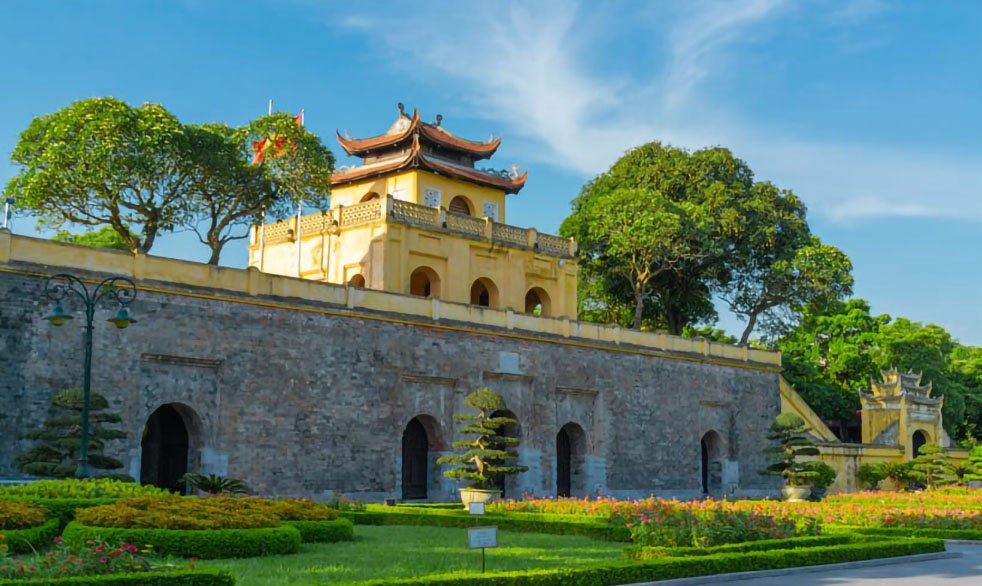
Central Sector of the Imperial Citadel of Thang Long – Hanoi (2010) – Cultural Heritage.

Trang An Landscape Complex (2014) – Mixed Heritage (Cultural and Natural)