
Reconstruction of Kinh Thien Palace Begins at the Heart of the Thang Long Imperial Citadel
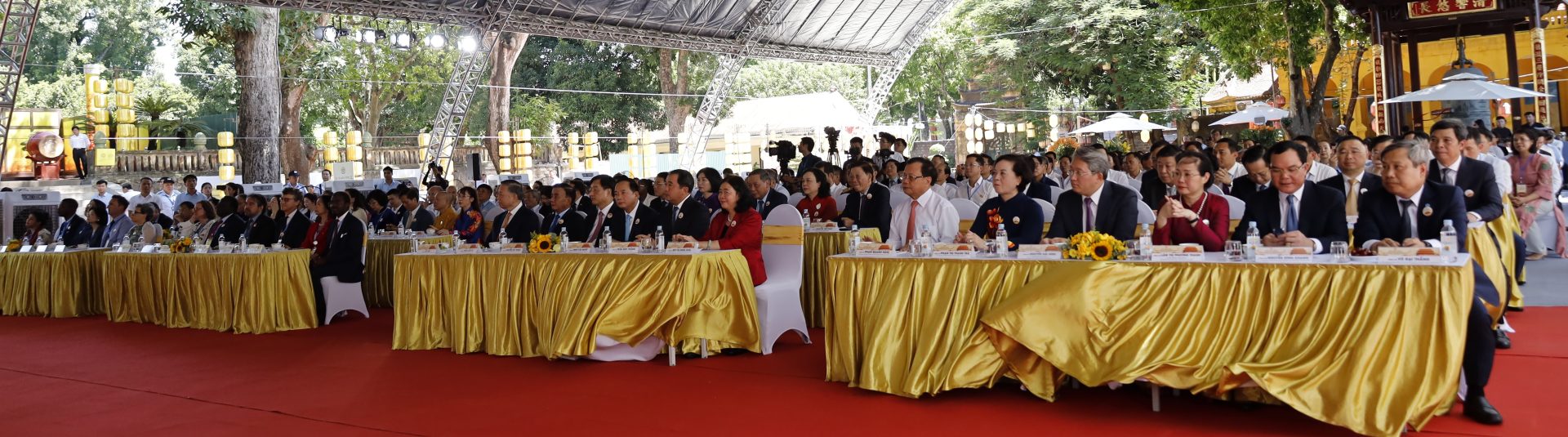
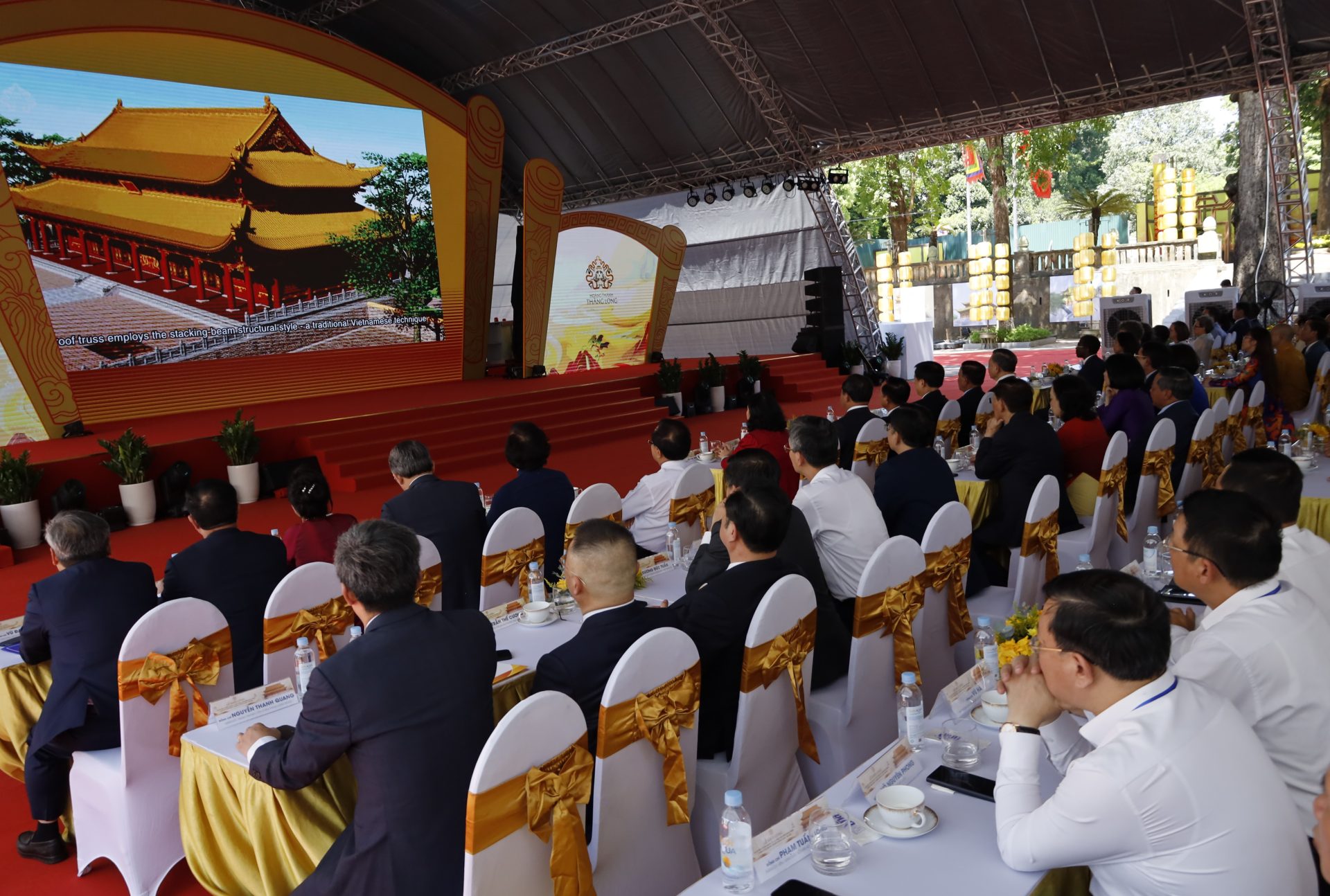
On the morning of September 29, 2026, at the Thang Long Imperial Citadel World Heritage site, 9 Hoang Dieu Street, Ba Dinh, Hanoi, the Hanoi Party Committee and People’s Committee held a groundbreaking ceremony for the Investment Project for the Preservation, Restoration and Reconstruction of Kinh Thien Palace. The event marked an important milestone in the research, conservation and gradual recovery of the central precinct of the Thang Long Forbidden City, drawing on 15 years of interdisciplinary research and extensive consultation with UNESCO, ICOMOS, and Vietnamese and international experts.
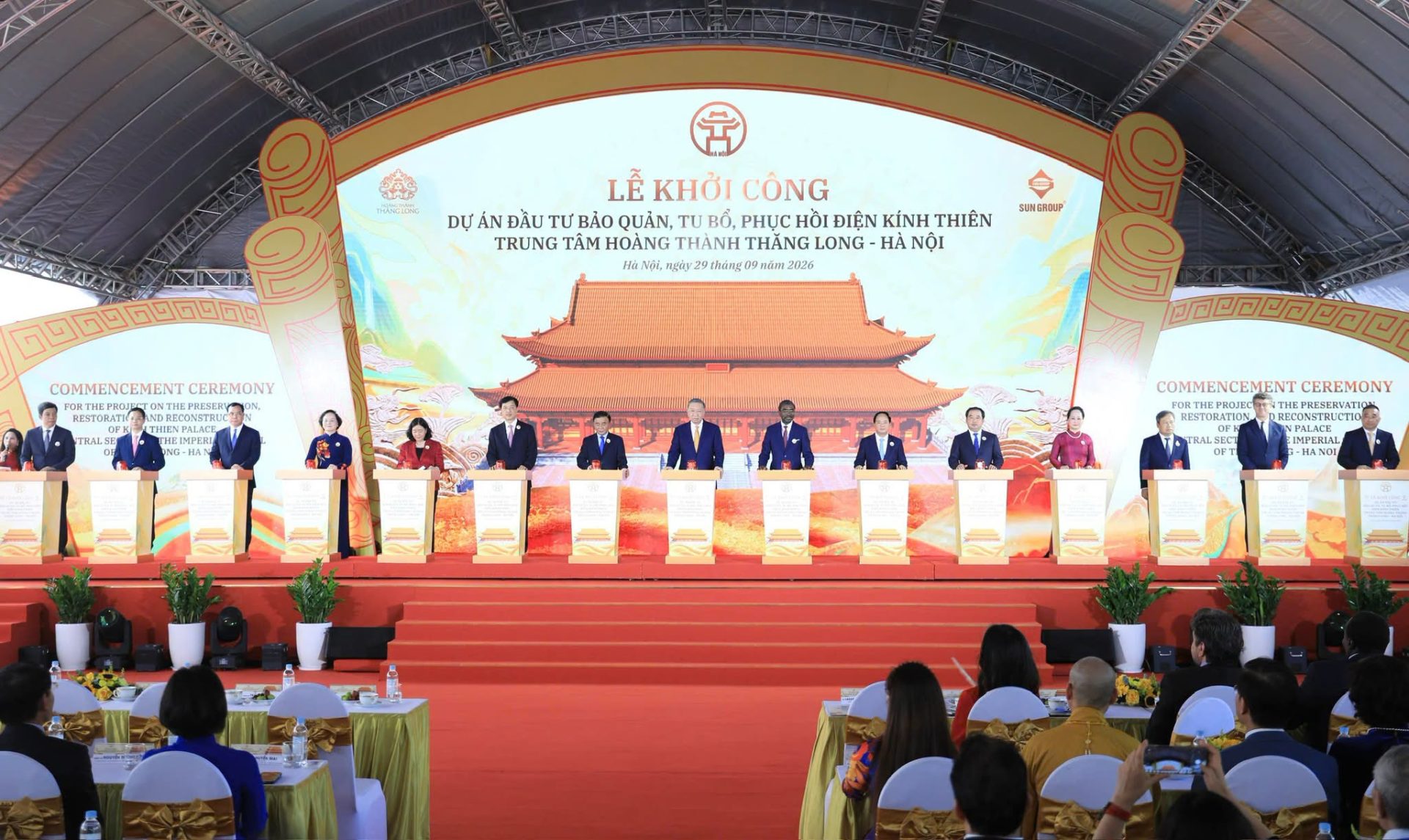
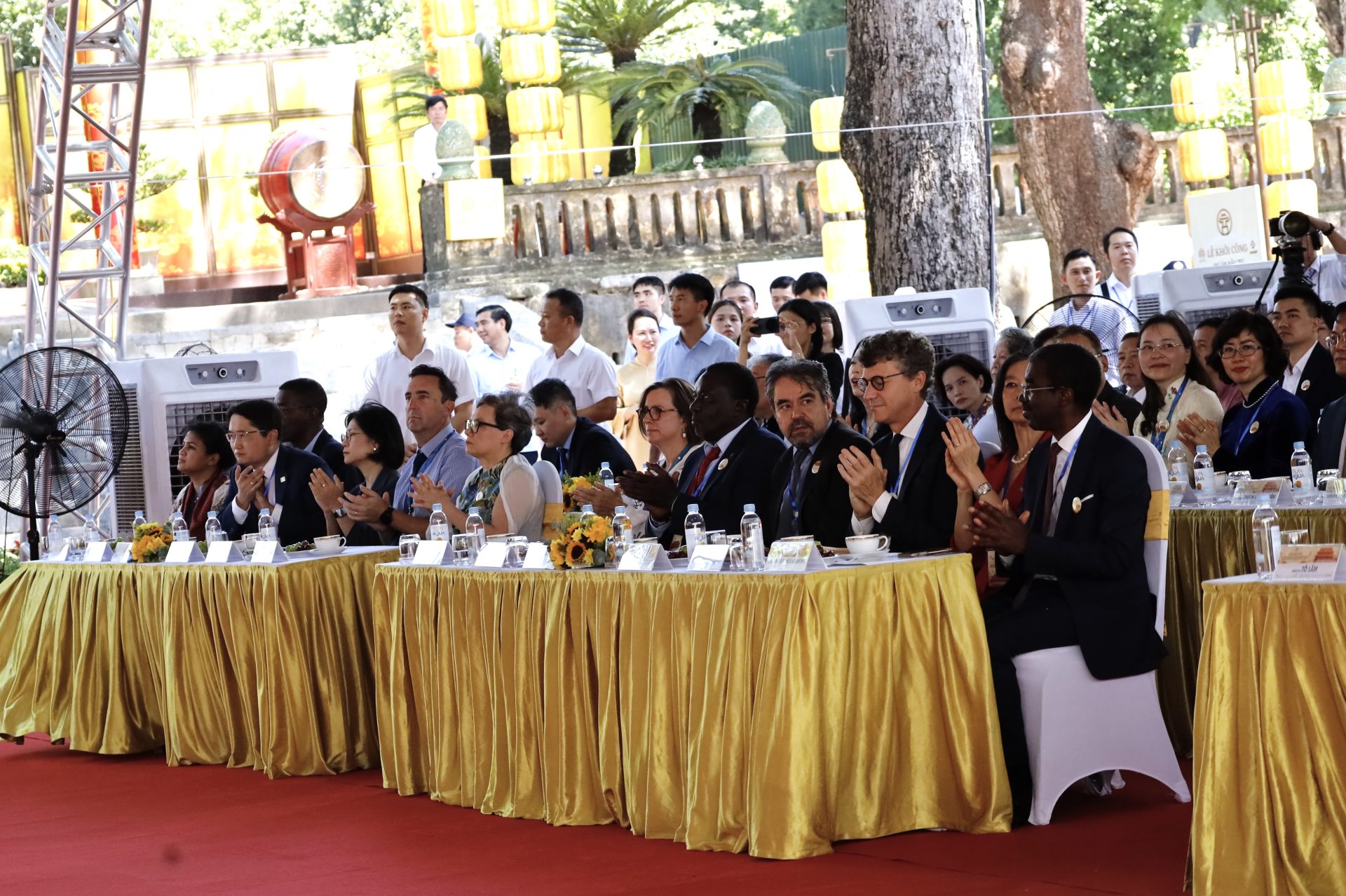
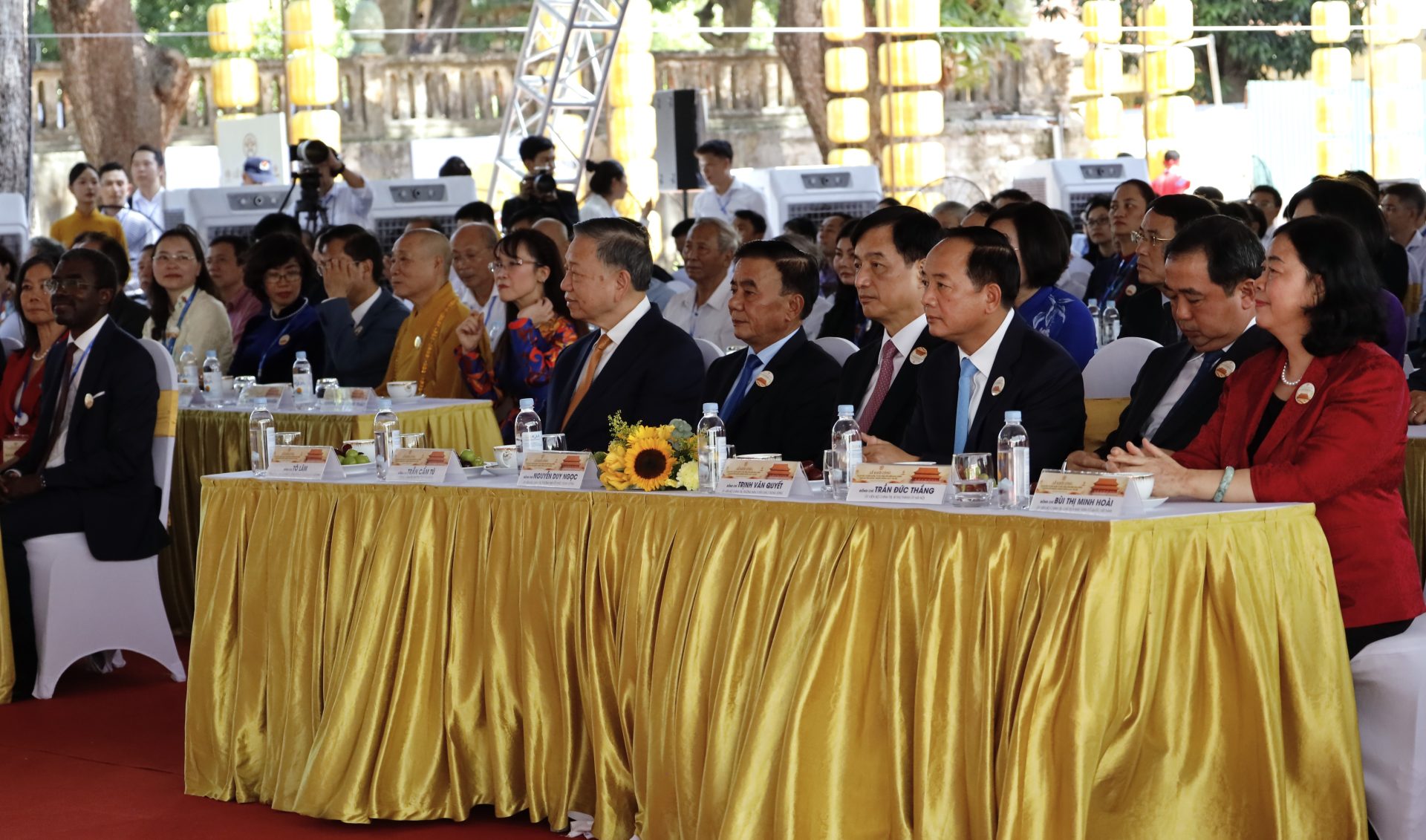
The ceremony was attended by General Secretary and President To Lam, together with Party and State leaders, Hanoi municipal leaders, representatives of UNESCO and ICOMOS, scholars, heritage specialists and organisations involved in implementing the project. The presence of public authorities, international organisations and specialists underscored the particular importance of Kinh Thien Palace within the Central Sector of the Imperial Citadel of Thang Long–Hanoi, as well as the exacting scientific, legal and technical requirements governing its conservation and reconstruction.
The reconstruction of Kinh Thien Palace has attracted attention from Vietnamese and international media
From Archaeological Evidence to the Decision to Reconstruct
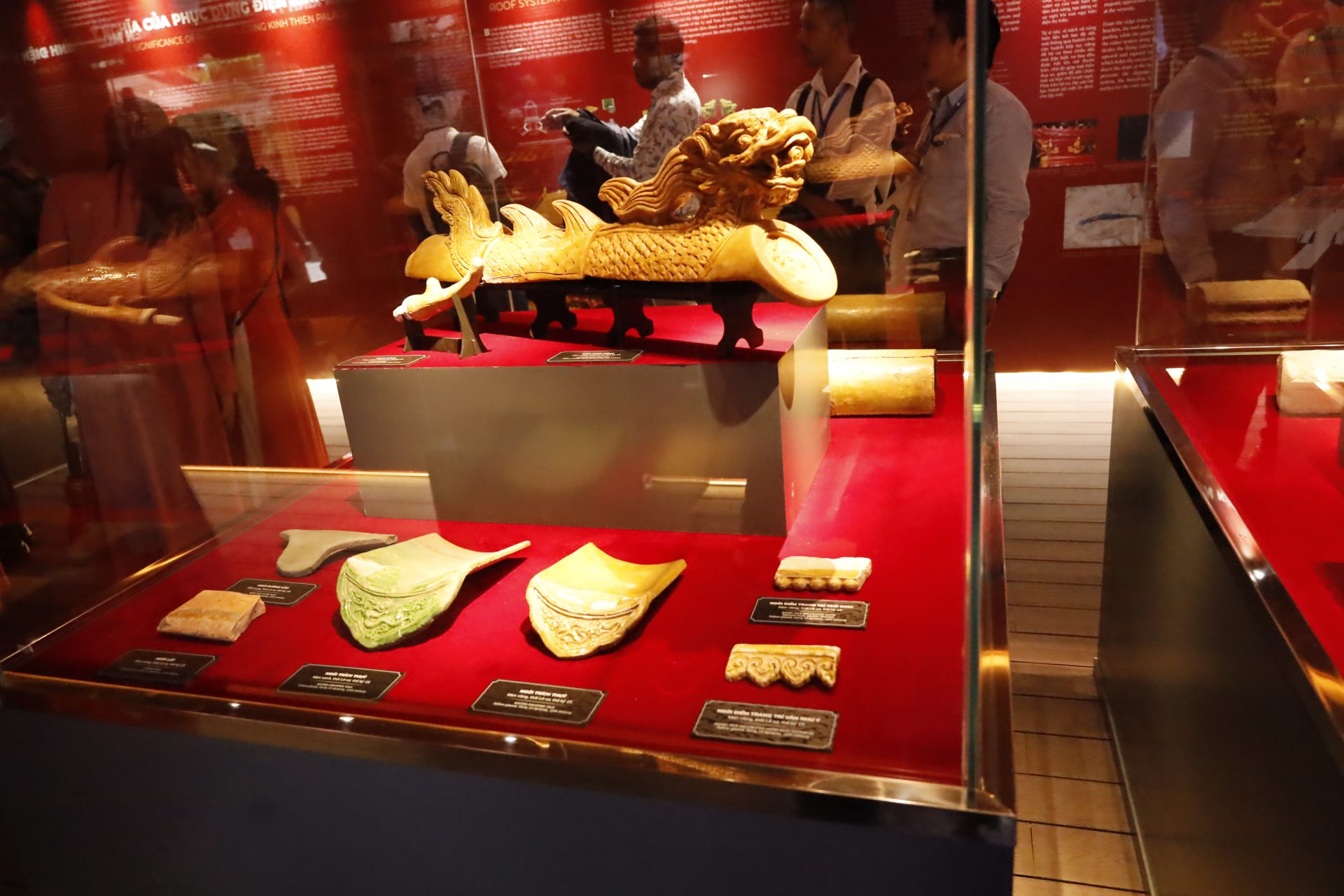
Kinh Thien Palace was one of the most important components of the central precinct of the former Thang Long Forbidden City. It occupied the heart of the Imperial Citadel, hosting political and diplomatic ceremonies and major national events across successive historical periods. Unlike buildings that survive relatively intact, however, the palace’s superstructure, as described in historical sources, no longer exists. Its heritage significance must therefore be understood through a combination of archaeological remains, cultural stratigraphy, architectural components recovered during excavations, historical records, written sources, maps, images and interdisciplinary research findings.
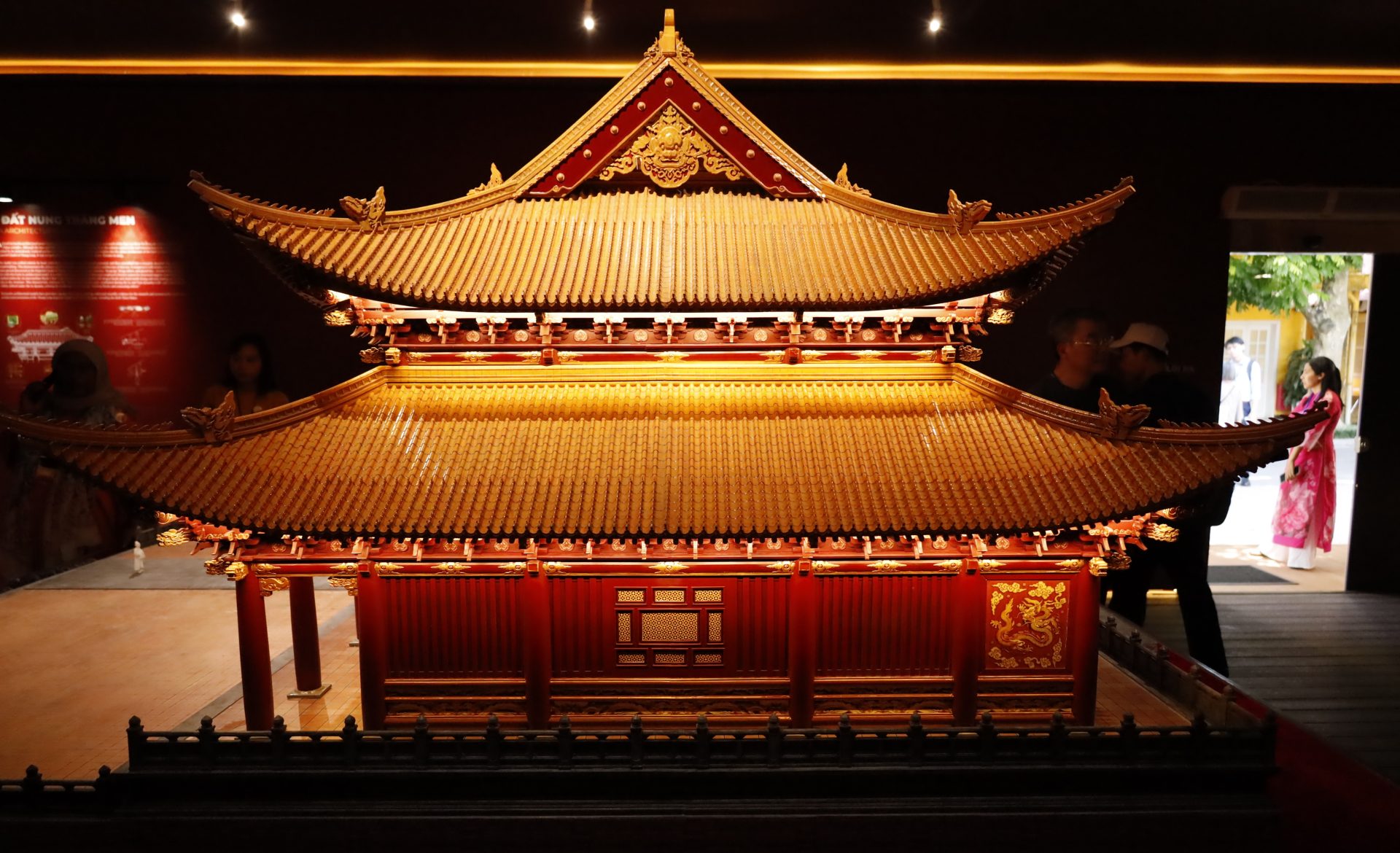
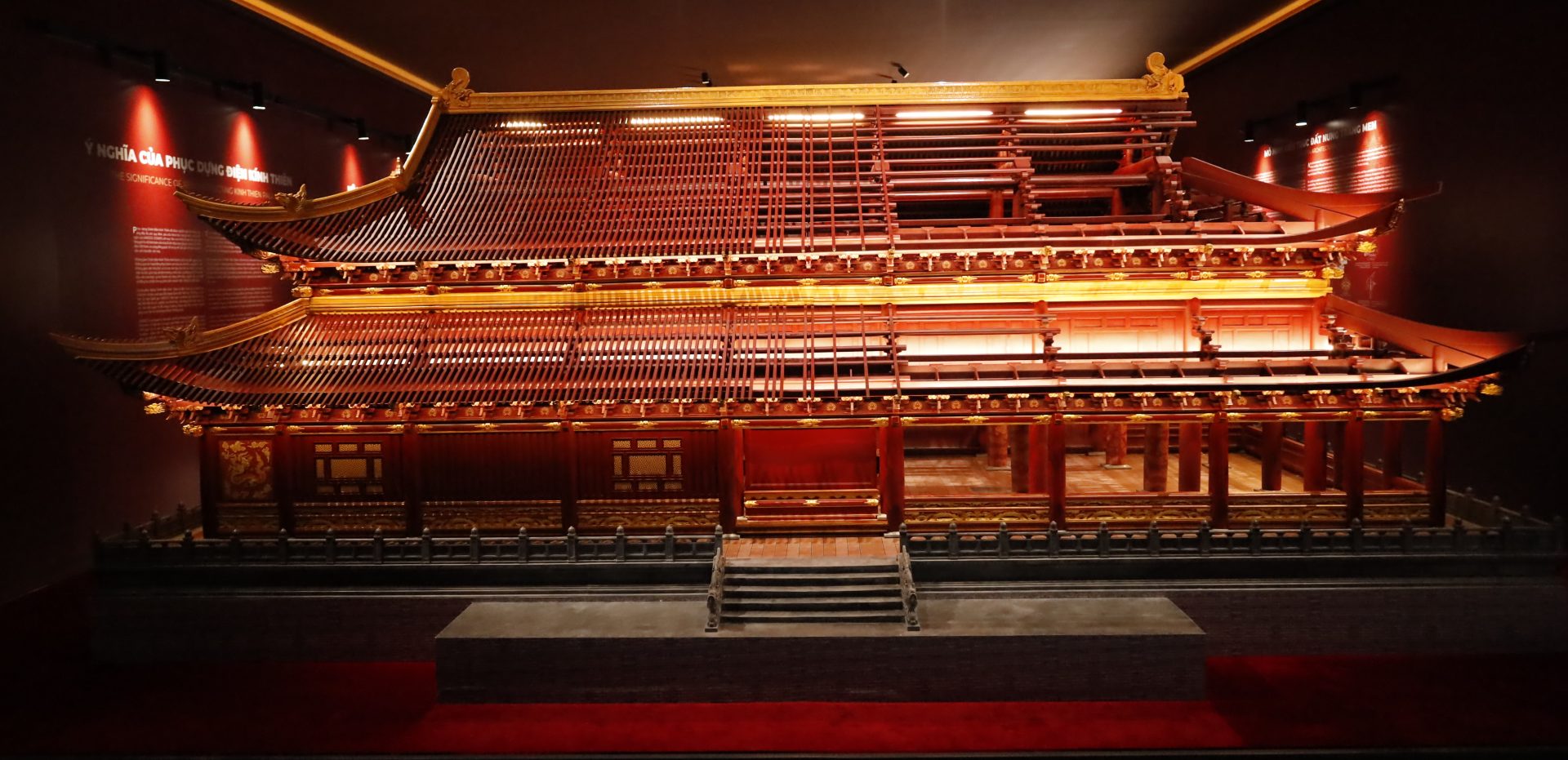
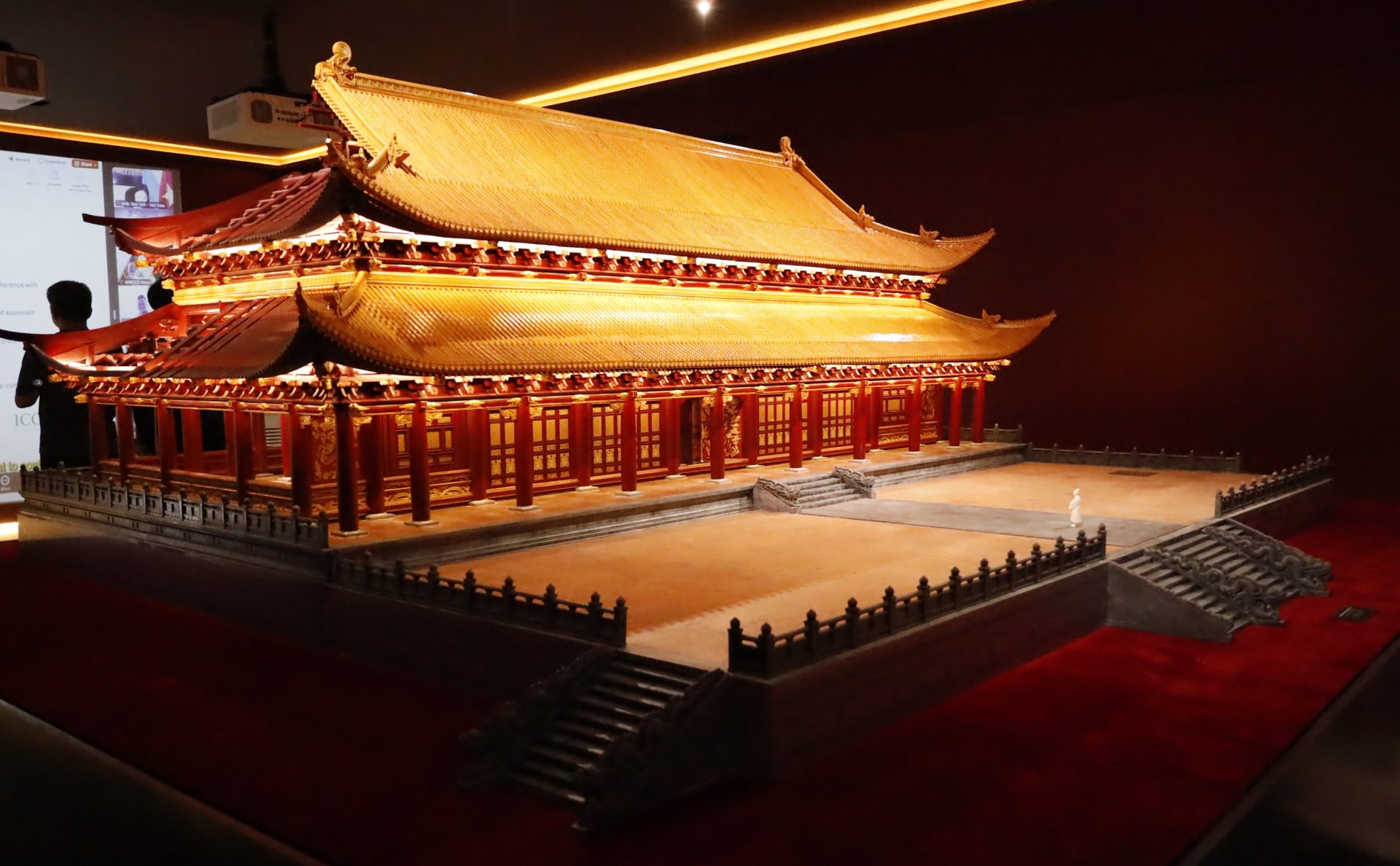
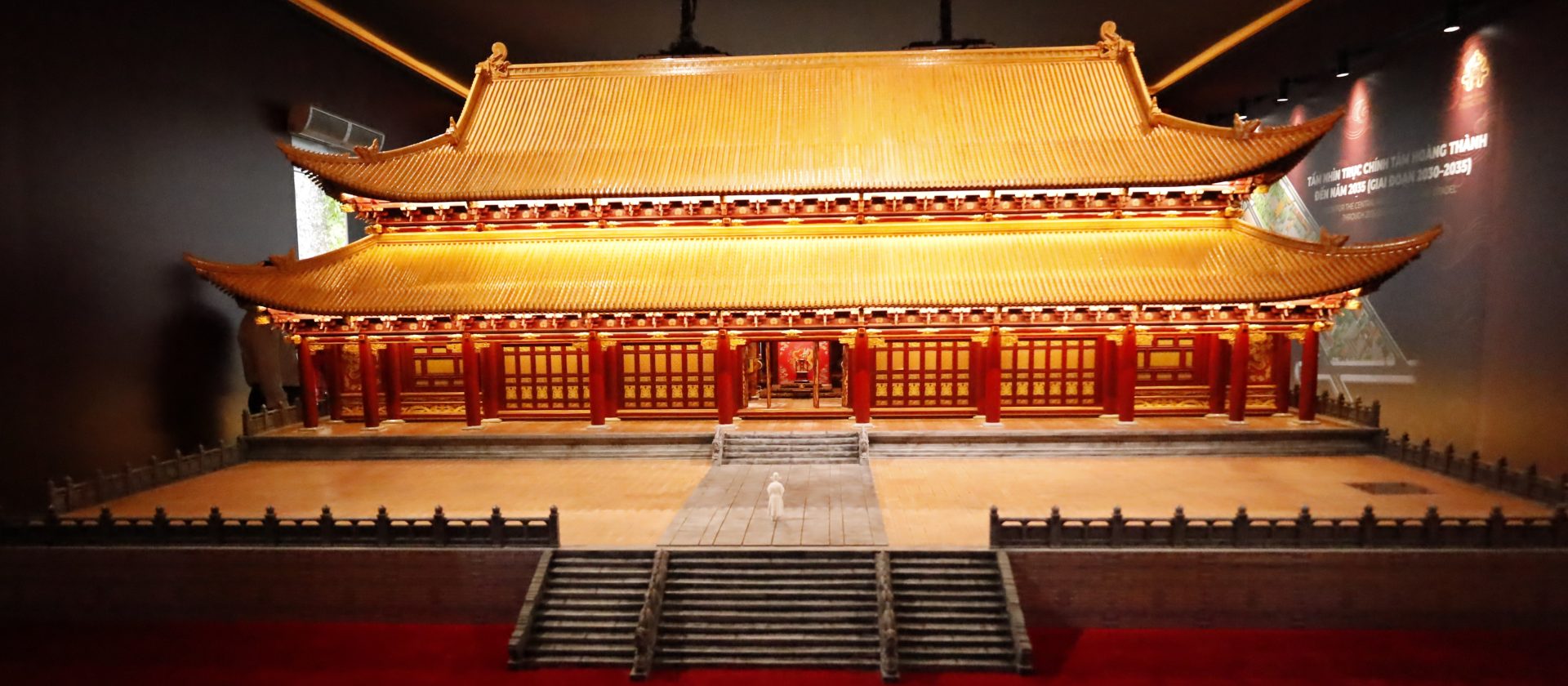
Model of Kinh Thien Palace
Over the past 15 years, scholars have undertaken numerous programmes of research, archaeological excavation, surveying, analysis and documentation in the Kinh Thien Palace area. Successive excavations have helped clarify the palace platform’s layout, scale and characteristics, and its spatial relationship with other architectural components in the central precinct of the Imperial Citadel. Importantly, the archaeological findings provide direct evidence of buildings from different periods while also revealing how Thang Long’s centre of power changed over the centuries. These findings form the essential scientific basis for progressively developing proposals for the palace’s preservation, restoration and reconstruction. Reconstruction is thus understood as a complex process encompassing research, interpretation and conservation, in which every intervention must be grounded in verifiable scientific evidence. The project is also taking place within a World Heritage property of Outstanding Universal Value, on one of the Imperial Citadel’s most important archaeological sites. Its purpose therefore extends beyond reconstructing an architectural symbol: it must also ensure that the archaeological remains below ground can be preserved intact and that the property’s authenticity and integrity are maintained.
Heritage Authenticity Must Not Be Sacrificed to Meet Deadlines
Speaking at the ceremony, Chairman of the Hanoi People’s Committee Vu Dai Thang emphasised the project’s distinctive circumstances: Kinh Thien Palace lies within a World Heritage property and above multiple significant archaeological layers. Implementation must therefore prioritise scientific rigour, caution and strict adherence to conservation principles. The project must remain on schedule, but never at the expense of the property’s authenticity, integrity or safety.
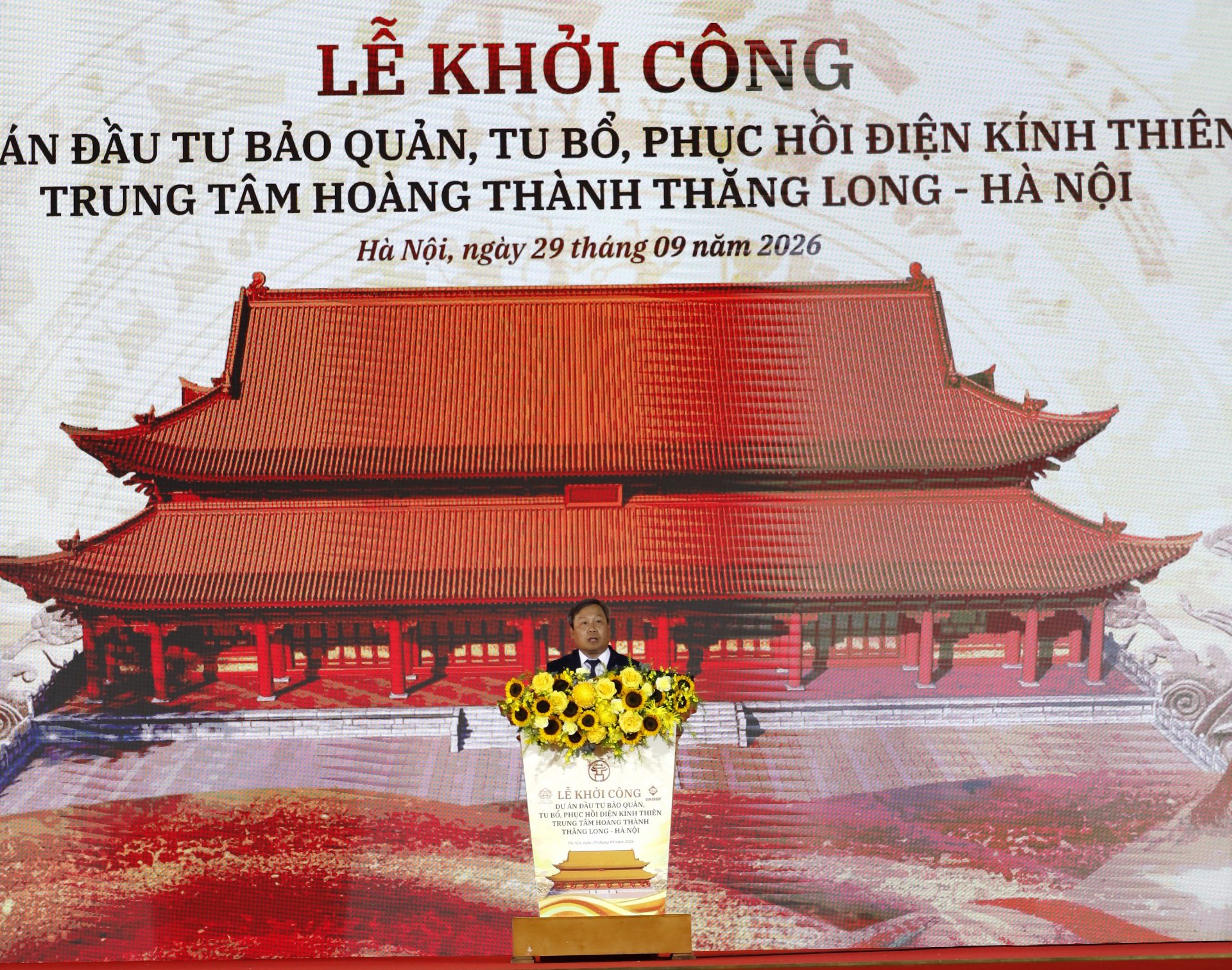
This position has particular significance for archaeological heritage conservation. Construction, foundation work and any intervention at ground level can directly affect stratigraphic layers and archaeological remains. Once a cultural layer is destroyed or an archaeological feature is treated improperly, the scientific information it contains may be irretrievably lost. The Chairman required the project owner, consultants, contractors and supervisors to comply fully with the approved project documentation and professional conservation requirements. In particular, if new archaeological features are discovered during construction, or issues arise for which there is insufficient scientific evidence to determine an appropriate response, those responsible must promptly cordon off the area, protect the remains in their existing condition and await expert advice. They must not take unilateral action to deal with new discoveries, and immediate scheduling pressures must never compromise the site’s enduring heritage values.
This approach also reflects the evolving nature of an archaeological heritage site, where each discovery may add to—or even alter—scholarly understanding of its historical development.
UNESCO: A Model of International Cooperation in Heritage Conservation
At the ceremony, Lazare Eloundou Assomo, Director of the World Heritage Centre, described the research, documentation, consultation and dialogue concerning the reconstruction of Kinh Thien Palace since 2023 as an exemplary collaborative process. He noted that the World Heritage Centre and the UNESCO Office in Hanoi had worked with the International Council on Monuments and Sites (ICOMOS) and international experts to advise Vietnamese specialists.
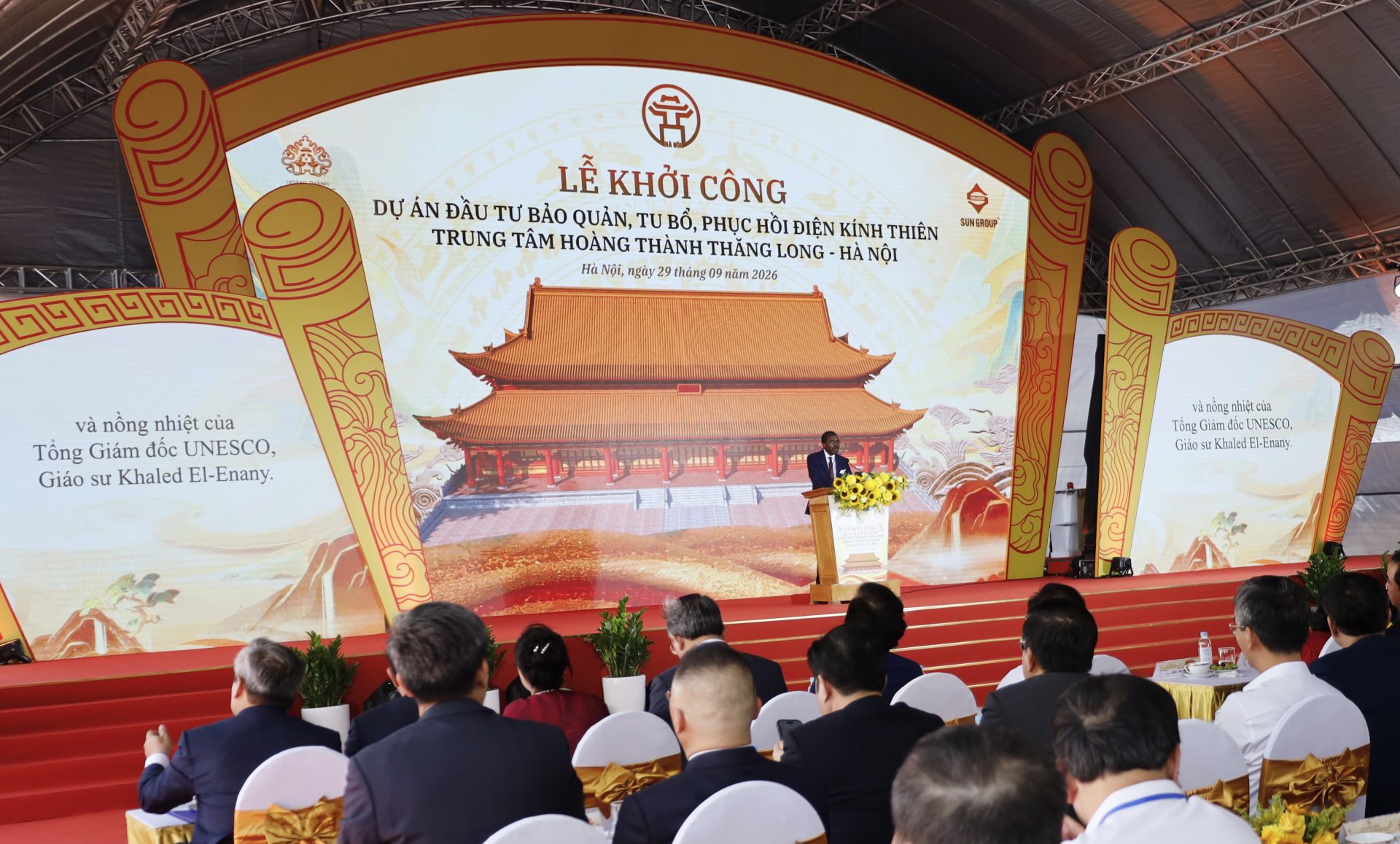
A defining feature of this process is that the reconstruction has been considered within the overall framework of values of the Central Sector of the Imperial Citadel of Thang Long–Hanoi. All research, designs and proposed interventions must be assessed in relation to the archaeological layers, historic landscape, urban structure, surviving architectural components and intangible values associated with the property. According to the Director of the World Heritage Centre, the significance of the Central Sector of the Imperial Citadel of Thang Long resides in its archaeological remains and surviving historic buildings, as well as in the layers of history, memory and tradition it preserves and its enduring relationship with the people of Hanoi. This perspective broadens conservation from protecting physical fabric to safeguarding the entire framework of values that gives the property its meaning. Historical memory, cultural traditions and the relationship between communities and the heritage space must therefore also be recognised in research and reconstruction.
Lazare Eloundou Assomo said that the launch of the Kinh Thien Palace project marked the beginning of a new phase of cooperation between Vietnam, UNESCO, ICOMOS and the World Heritage Committee. Research and dialogue would remain essential throughout implementation. The groundbreaking ceremony therefore marked a transition from research and preparation to work on site, with a continuing obligation to verify, supplement and adjust proposals in light of new scientific evidence.
A special responsibility toward a heritage with over 1,300 years of history
Representing the project contractor, Tran Minh Son, a member of Sun Group’s Founding Council and Standing Vice Chairman of its Board of Directors, expressed his honour and pride in being entrusted by the Party, the State and Hanoi authorities with implementing the project for the preservation, restoration and reconstruction of Kinh Thien Palace.
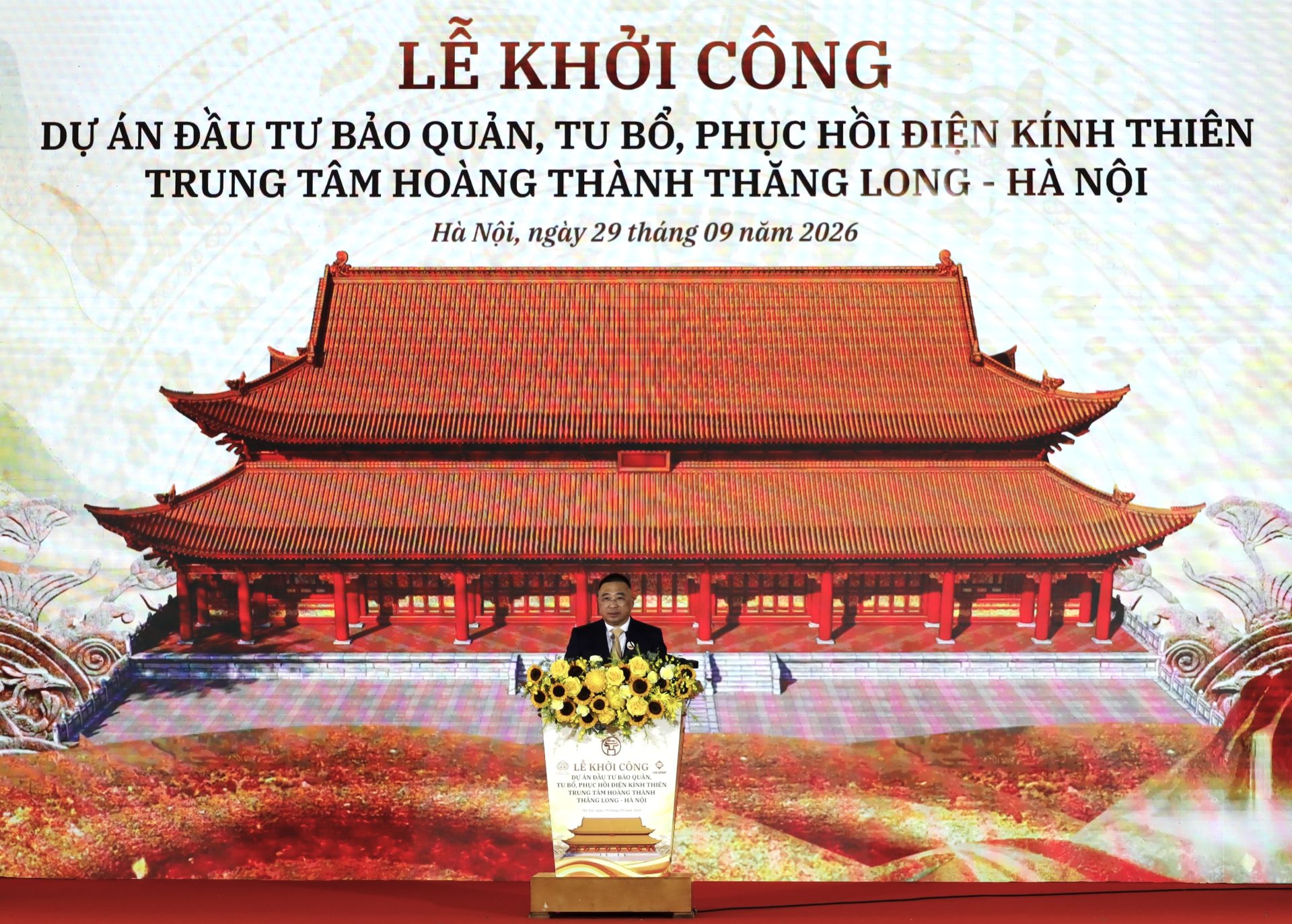
Standing at the Thang Long Imperial Citadel—the sacred heart of a capital with a thousand-year cultural tradition, in what was once the centre of the Forbidden City—he said that those undertaking the project fully understood their special responsibility towards history and heritage. He emphasised that every brick and stone at the Imperial Citadel carries memories of more than 1,300 years of history. Sun Group therefore pledged to carry out the project with dedication and responsibility, ensuring quality and timely delivery while honouring the trust placed in it and the values bequeathed by previous generations.
From a conservation perspective, commitments to quality and scheduling represent only part of the project’s requirements. More important are the capacity to control construction impacts on the site, coordinate expertise in archaeology, architecture, materials, geology, structural engineering, heritage conservation and management, and maintain a mechanism for expert consultation whenever unforeseen circumstances arise.
Kinh Thien Palace and the Challenge of Reconstruction within a World Heritage Property
The launch of the project raises a broader scholarly question for heritage conservation in Vietnam: how can a historic building of exceptional significance be reconstructed when most of its original architecture has disappeared, while archaeological, historical and architectural evidence continues to be discovered and interpreted?
The answer cannot rest on a single source. It requires an interdisciplinary methodology in which archaeology provides material evidence; history and textual scholarship explain the historical context; architectural research examines the building’s form and structure; materials science identifies the properties of its construction materials; geology and engineering assess foundation conditions; and conservation science determines the appropriate extent and methods of intervention. Above all, assumptions about the reconstructed architecture must be clearly distinguished from features established through scientific evidence. This principle is decisive in preventing reconstruction from becoming a speculative representation. In this context, Kinh Thien Palace could become an important case study in methods for conserving and reconstructing archaeological and architectural heritage where original physical evidence is limited, but the body of research evidence continues to grow.
A New Phase in the Conservation of the Thang Long Imperial Citadel
The groundbreaking ceremony consequently carries significance beyond that of a construction investment project. It marks an important transition from research, excavation, the identification of heritage values and international consultation to the implementation of a major conservation programme governed by rigorous scientific principles.
After 15 years of interdisciplinary research, archaeological findings have strengthened the basis for understanding the structure and significance of the Kinh Thien Palace area. Consultation with UNESCO, ICOMOS and international experts continues to provide an important additional level of scrutiny for the conservation proposals. In this new phase, the challenge is to maintain a balance between conservation and reconstruction; between the desire to recreate a historic space and the need to protect its surviving material evidence; and between completing the project and safeguarding the World Heritage property’s authenticity and integrity. Kinh Thien Palace is more than a historic building. It is a point of convergence for layers of memory encompassing national history, the history of the imperial capital of Thang Long, and Hanoi’s formation and development. Every decision to intervene at the site today is therefore also a decision about how future generations will recognise and understand the past.
With its accumulated research evidence, established framework for international cooperation and stringent conservation requirements set from the outset, the Kinh Thien Palace project is entering a new phase. Its success will be measured by the completed building’s form and, above all, by its ability to safeguard the authentic values that archaeology and history have entrusted to the present. In this sense, breaking ground at Kinh Thien Palace also begins a sustained dialogue between past and present, scientific research and conservation practice, and the responsibilities of today’s generation towards the historical values transmitted through more than a millennium at the Thang Long Imperial Citadel.
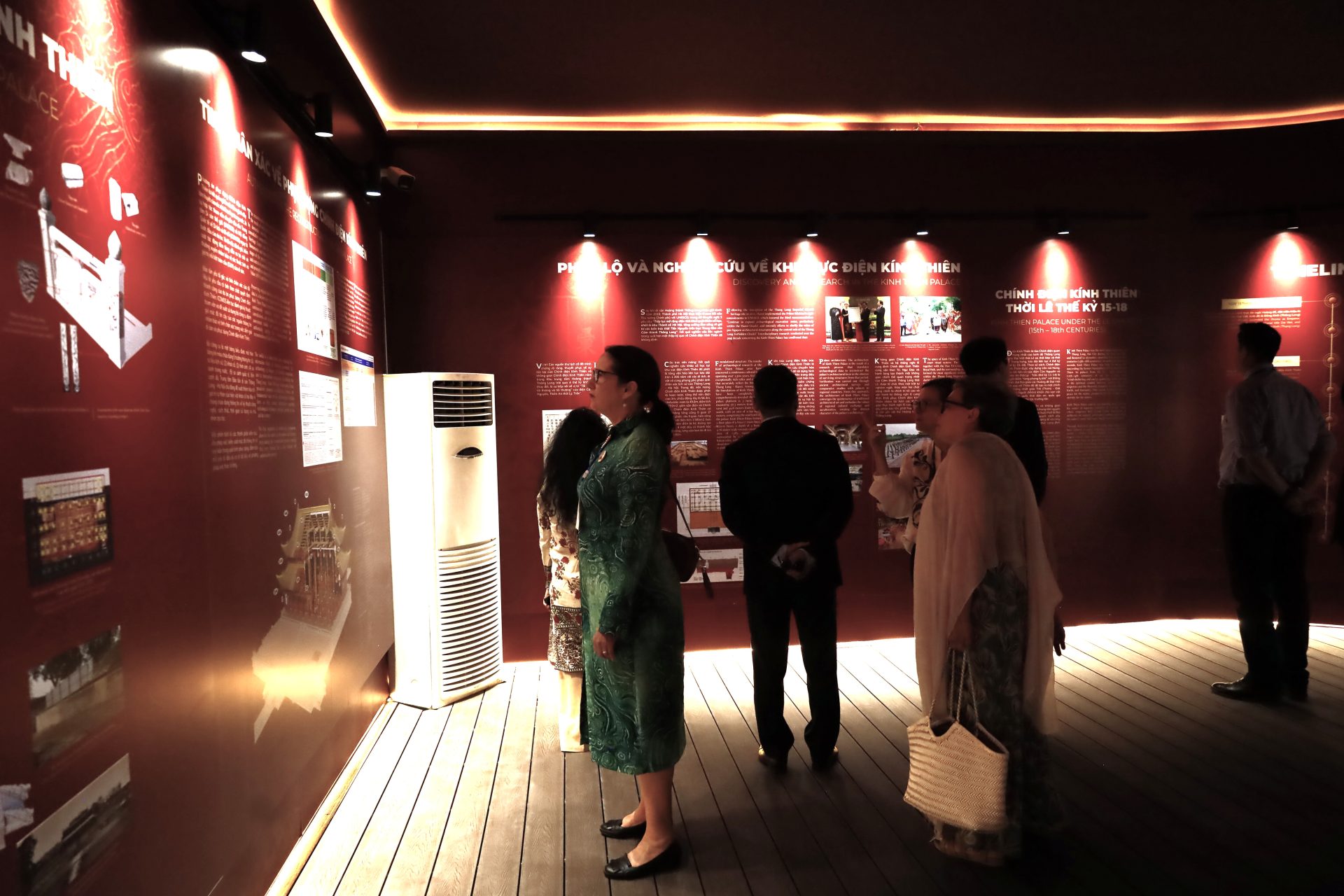
“Selected images from the groundbreaking ceremony for the Investment Project for the Preservation, Restoration and Reconstruction of Kinh Thien Palace at the Thang Long Imperial Citadel World Heritage site”
Editorial Board