Preliminary report on the results of the 2025 archaeological excavation at the foundation area of Kinh Thien Palace
In accordance with the recommendations of UNESCO/ICOMOS, and Decisions No. 46 COM 7B.43 and No. 47 COM 7B.92 of the World Heritage Committee, which agreed with the proposals submitted by Viet Nam regarding the orientation, vision and approach to research, conservation and enhancement of the World Heritage Site of the Imperial Citadel of Thang Long – Hanoi, Decision No. 46 COM 7B.43 approved the dismantling of six late modern buildings located on the Royal Path along the central axis of the Imperial Citadel of Thang Long. These buildings include the Artillery Building (CT04), the Operations Department Building (CT17), and four additional buildings (CT20, CT21, CT24 and CT25), with the purpose of creating archaeological excavation space in order to carry out comprehensive research on the area of Kinh Thien Palace and its associated ceremonial space. Decision No. 47 COM 7B.92 formally approved all proposals submitted by Vietnam concerning the completion of research strategies, conservation measures and heritage interpretation for the Imperial Citadel of Thang Long – Hanoi, with the aim of ensuring effective protection and promotion of its outstanding universal value.
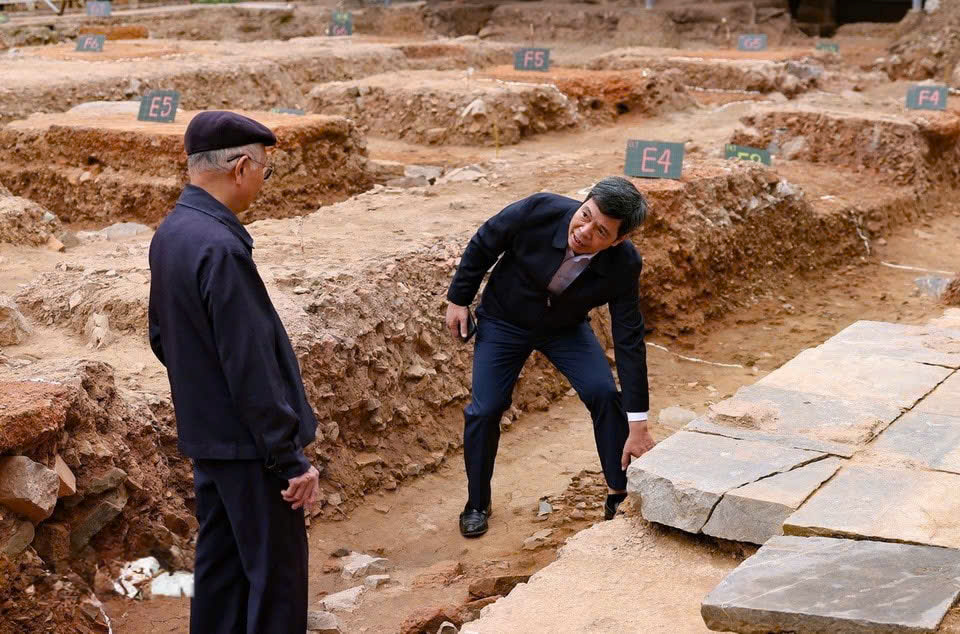
On this basis, the Thang Long – Hanoi Heritage Conservation Centre, in coordination with the Institute of Archaeology, implemented the direction of the Hanoi People’s Committee and Decision No. 1344/QD-BVHTTDL dated 13 May 2025 of the Minister of Culture, Sports and Tourism, to conduct archaeological excavation in the foundation area of Kinh Thien Palace, located on the central axis of Thang Long – Hanoi, with a total excavation area of 580 square metres. The excavation area was located beneath the former Artillery Building (CT04). In order to create the excavation surface, the building was dismantled in accordance with Decision No. 46 COM 7B.43. The dismantling was carried out in strict compliance with the procedures reported to UNESCO, applying controlled dismantling methods in line with the International Charter for the Conservation and Restoration of Monuments and Sites (Venice Charter, 1964), and in accordance with the 2024 Law on Cultural Heritage of Vietnam.
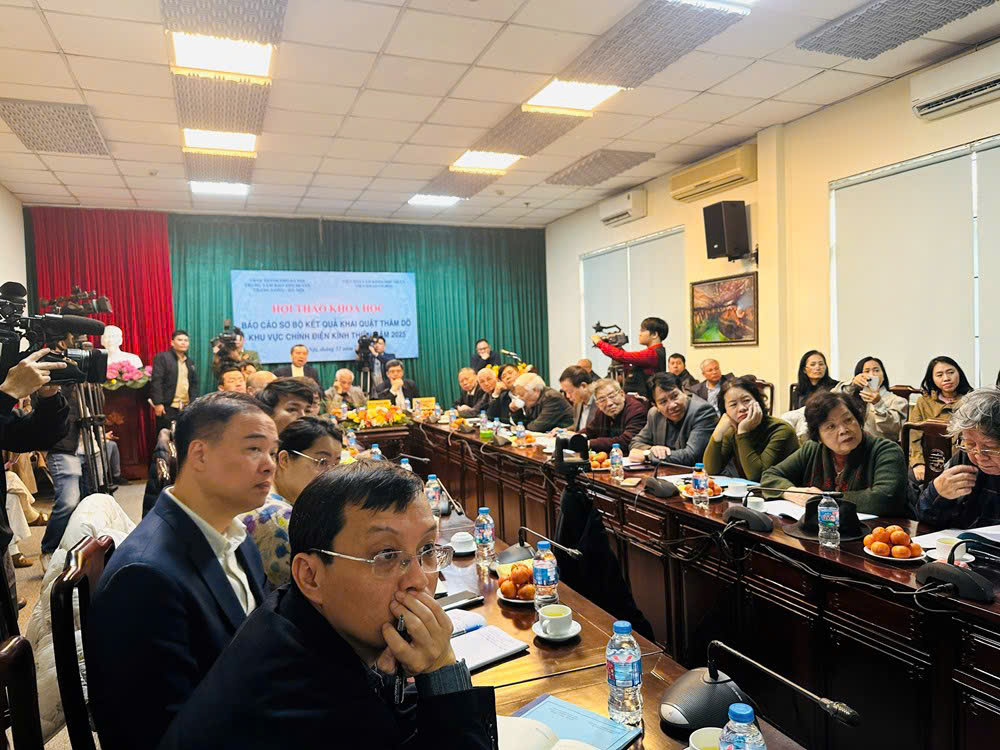
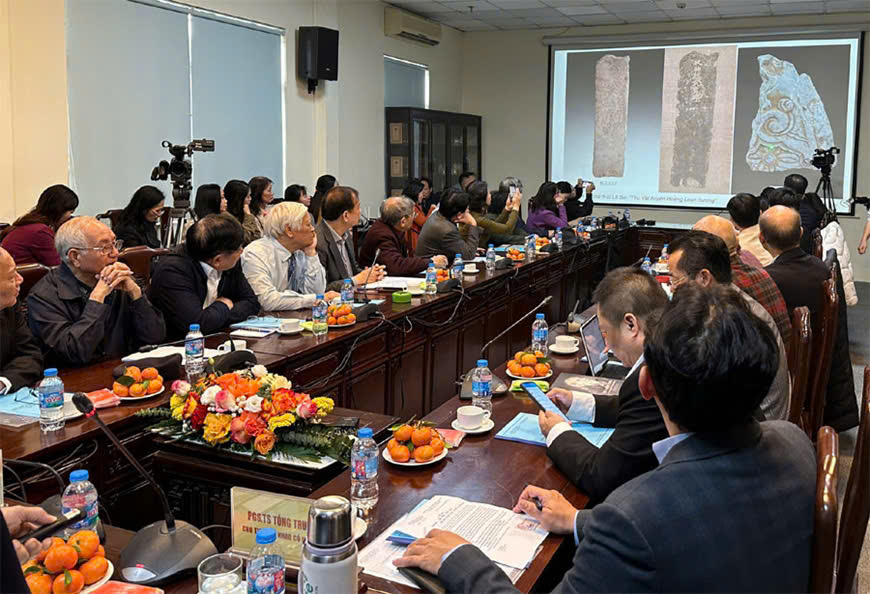
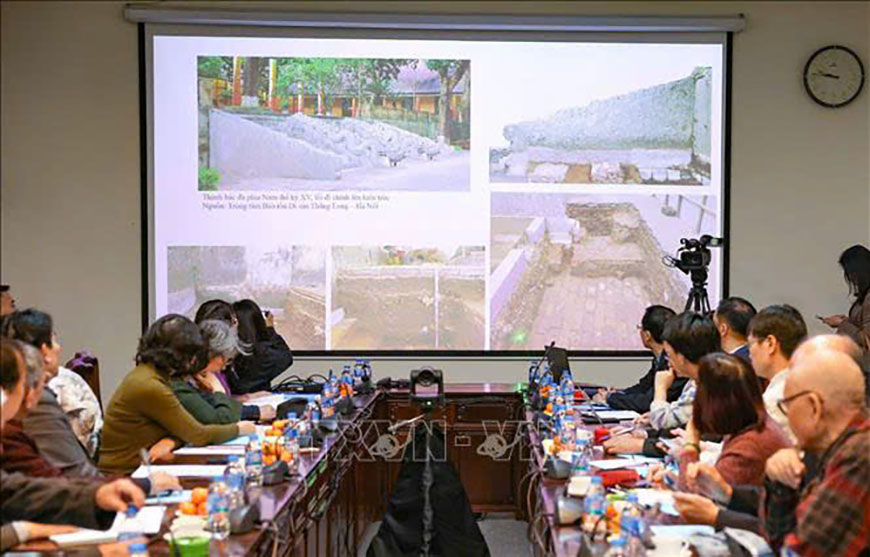
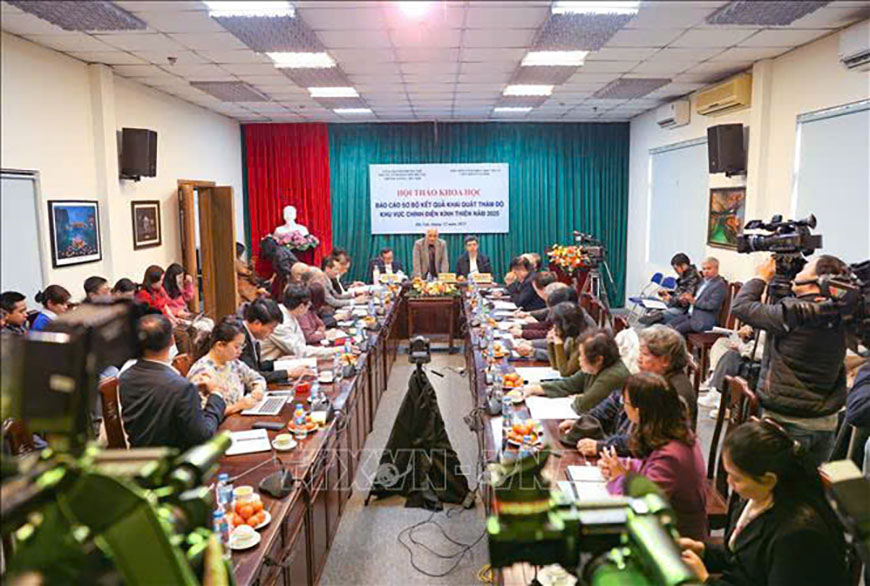
On the morning of 29 December 2025, the Thang Long – Hanoi Heritage Conservation Centre, in coordination with the Institute of Archaeology, organised a workshop to present the preliminary results of the 2025 archaeological excavation at the foundation area of Kinh Thien Palace. The workshop was attended by heritage managers and scholars; members of the Scientific Advisory Council for research and conservation of the Co Loa Citadel – Hanoi Ancient Citadel; specialists and researchers from institutes under the Vietnam Academy of Social Sciences; representatives of the Ministry of Culture, Sports and Tourism; the UNESCO Office in Hanoi; professional associations; universities; departments and agencies of the Hanoi municipal government; the leadership and staff of the Thang Long – Hanoi Heritage Conservation Centre; as well as a large number of journalists from print and broadcast media.
The preliminary results of the 2025 archaeological excavation at the foundation area of Kinh Thien Palace are as follows:
- The stratigraphic sequence in the excavation area has a depth of approximately six metres and consists of six cultural layers dating from the Pre-Thang Long period, from the 7th to the 10th centuries, through to the modern period of the 19th and 20th centuries. Among these layers, the cultural layer of the Le dynasty is the thickest, reaching nearly three metres, and includes successive layers from the Early Le period and the Restored Le period.
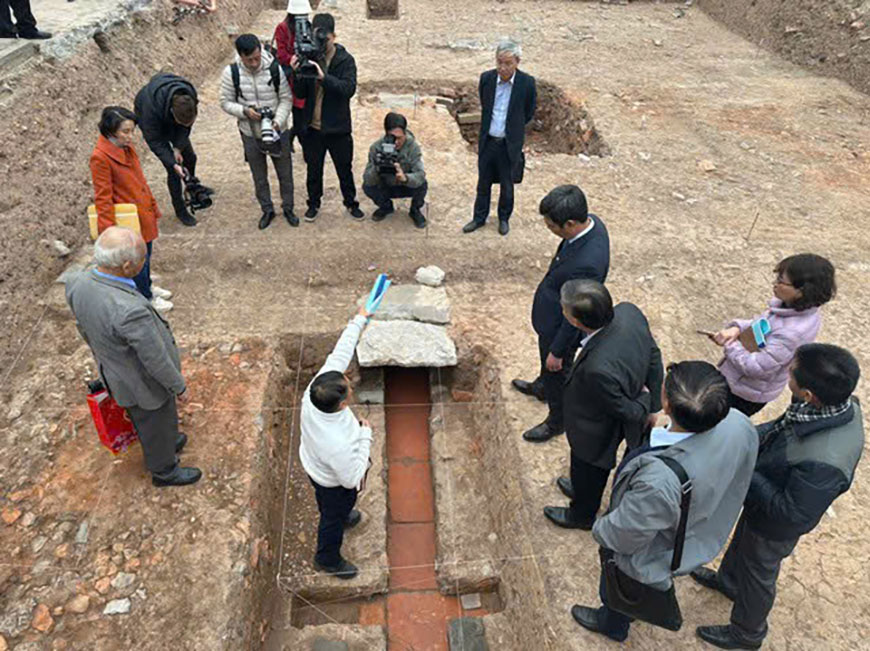
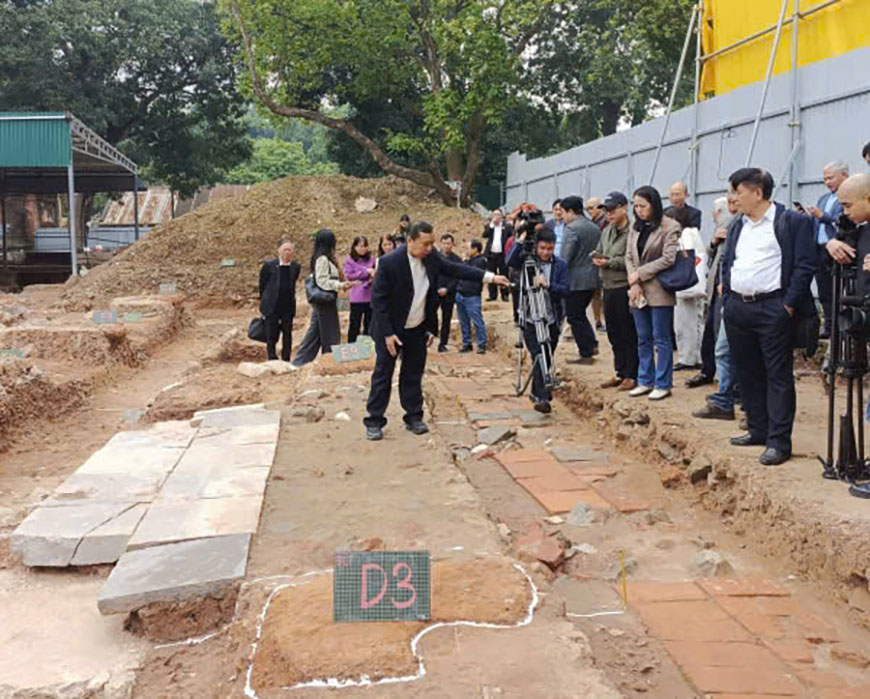
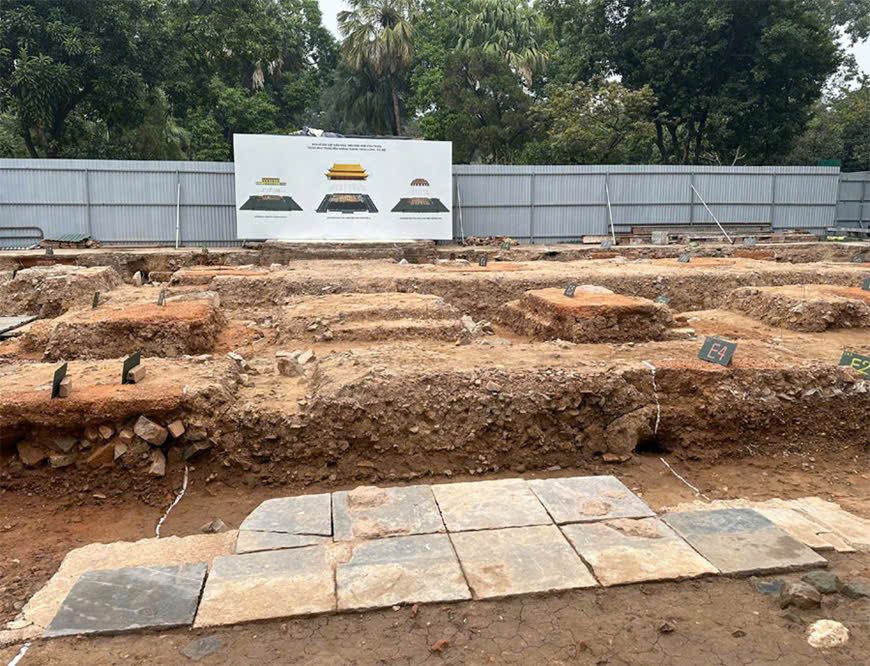
- Corresponding to these cultural layers are architectural remains from different historical periods, including one row of red bricks dating to the Tran dynasty of the 13th and 14th centuries; one row of grey bricks dating to the Early Le period of the 15th and 16th centuries; a stone-paved foundation of the Royal Path; and fourteen column foundations of Kinh Thien Palace dating to the Restored Le period of the 17th and 18th centuries. These discoveries bring the total number of column foundations of Kinh Thien Palace identified through excavations conducted in 2011, 2023 and 2025 to thirty out of an estimated total of thirty-six foundations, comprising two types: single foundations and double foundations. For the Nguyen dynasty period of the 19th century, the excavation revealed two drainage culverts and twenty-six out of sixty-four column foundations associated with the architecture of Long Thien Palace.
The remains of Long Thien Palace correspond exactly to the east-west limits of the former French colonial Artillery Building. The exposed system of column foundations and drainage structures allows the conclusion that Long Thien Palace was constructed under Emperor Gia Long, following the characteristic Nguyen architectural form known as “trung thiem diep oc”, in which a front hall and a main hall were built on a shared foundation and connected by an intermediate structural bay.
- The excavation has clarified the scale and foundation structure of Kinh Thien Palace during the Le dynasty, as well as Long Thien Palace during the Nguyen dynasty, and for the first time has identified cultural remains dating to the Ly, Tran and Pre-Thang Long periods at this location. Historical records indicate that the foundation of Kinh Thien Palace was entirely artificial, with the whole surface of the area constructed through carefully compacted layers of clay mixed with fragmented materials. Only after this process were the positions of column foundations planned and constructed, most clearly during the Restored Le period. The column foundation system of this period includes two types: single foundations measuring approximately 2.8 – 3.5 by 2.5 – 3.5 metres, and double foundations measuring approximately 5.4 – 6.1 by 2.7 – 3.0 metres. These foundations were constructed through eighty-one compacted layers, with a total depth of four metres. This represents the largest column foundation dimensions recorded in the history of Vietnamese architectural construction. Notably, single foundations are distributed within the interior of the structure, while double foundations are mainly located along the outer perimeter. Based on the foundations exposed to date, the east-west extent of Kinh Thien Palace can be provisionally identified as comprising nine bays. The north-south extent requires further research in order to determine the layout of Kinh Thien Palace during the Le period with greater accuracy.
The platform foundations and column foundations of Kinh Thien Palace dating to the Early Le and Restored Le periods, from the 15th to the 18th centuries, were constructed on earlier clay foundations dating to the Tran period of the 13th and 14th centuries, the Ly period of the 11th and 12th centuries, and pre-Ly layers dating from the 7th to the 10th centuries. According to historical sources, Kinh Thien Palace of the Le dynasty was built on the site of Thien An Palace of the Ly and Tran dynasties. At a limited test pit location, the excavation recorded the presence of clear cultural remains from all three earlier periods. However, due to UNESCO conservation requirements relating to the Le-period foundations and the highly complex stratigraphic conditions of the site, the excavation could not fully expose detailed architectural remains of the Ly and Tran periods. Investigation was therefore limited to confirming the presence of six architectural layers corresponding to six historical periods, from Dai La, dated approximately from the 7th to the 9th centuries and continuing into the 10th century, followed by the Ly, Tran, Early Le, Restored Le, Nguyen and late modern periods, superimposed at the foundation area of Kinh Thien Palace.
The 2025 archaeological excavation at the foundation area of Kinh Thien Palace has provided new and important information, revealing a cultural sequence approximately six metres in depth and contributing further evidence for identifying the location and structure of Kinh Thien Palace during the Le period, from the 15th to the 18th centuries, built above cultural layers dating to the Ly and Tran periods of the 11th to 14th centuries and the Pre-Thang Long period of the 7th to 10th centuries. These results confirm the long-term importance of the Kinh Thien Palace site within the historical and cultural development of Thang Long in particular and Dai Viet more broadly over more than a thousand years. This constitutes a reliable scientific basis for research and decision-making related to the reconstruction strategy of Kinh Thien Palace and its associated ceremonial space during the Le dynasty. The excavation also meets the recommendations of UNESCO/ICOMOS and the requirements of the Law on Cultural Heritage, and provides clearer evidence of the attributes that underpin the Outstanding Universal Value of the World Heritage Site of the Imperial Citadel of Thang Long – Hanoi.
Participants at the workshop discussed the results actively and expressed their satisfaction with the outcomes of the 2025 archaeological excavation, as well as with the broader body of research conducted at the Imperial Citadel of Thang Long. All opinions emphasised that this was a scientifically sound and persuasive excavation and recommended that archaeological work should continue, in particular through the expansion of the 2025 excavation area, in order to obtain additional scientific evidence to support the reconstruction of Kinh Thien Palace and the restoration of its ceremonial spatial context.
Mr Nguyen Thanh Quang, Director of the Thang Long – Hanoi Heritage Conservation Centre, stated that archaeological excavation work at the Imperial Citadel of Thang Long has been carried out in strict fulfilment of the Vietnamese Prime Minister’s commitment to the World Heritage Committee “to continue expanding the area of archaeological excavation, especially within the Hanoi Citadel, and to strengthen research aimed at clarifying the values of pre-Nguyen architectural remains along the central axis of the Thang Long Imperial Citadel”. From 2010 to the present, the Thang Long – Hanoi Heritage Conservation Centre, in cooperation with the Institute of Archaeology, has conducted archaeological excavations over an area of approximately 10,000 square metres. The results of these excavations have revealed a rich and continuous system of architectural remains dating from the Ly, Tran, Le and Nguyen dynasties. In particular, a number of important architectural features have been identified, including large-scale Ly – Tran architectural complexes associated with extensive water management systems, pebble-based column foundations, courtyards paved with square bricks, and decorative brick-paved pathways. These findings have contributed to a clearer understanding of the central axis of the Imperial Citadel of Thang Long during the Early Le period of the 15th and 16th centuries and the Restored Le period of the 17th and 18th centuries.
The 2025 archaeological excavation has provided additional important documentation concerning the structure and extent of the Le-period Kinh Thien Palace complex, thereby strengthening the scientific basis for the implementation of the project to reconstruct the spatial configuration of Kinh Thien Palace and its main hall, and further deepening the values of the World Heritage Site of the Imperial Citadel of Thang Long – Hanoi. In the coming years, archaeological excavation will continue through cooperation between the Thang Long – Hanoi Heritage Conservation Centre and the Institute of Archaeology. Future research will focus on generating additional materials to address outstanding questions, with particular emphasis on comparative studies to contribute further evidence for the reconstruction of the spatial organisation of Kinh Thien Palace and its main hall during the Le dynasty.
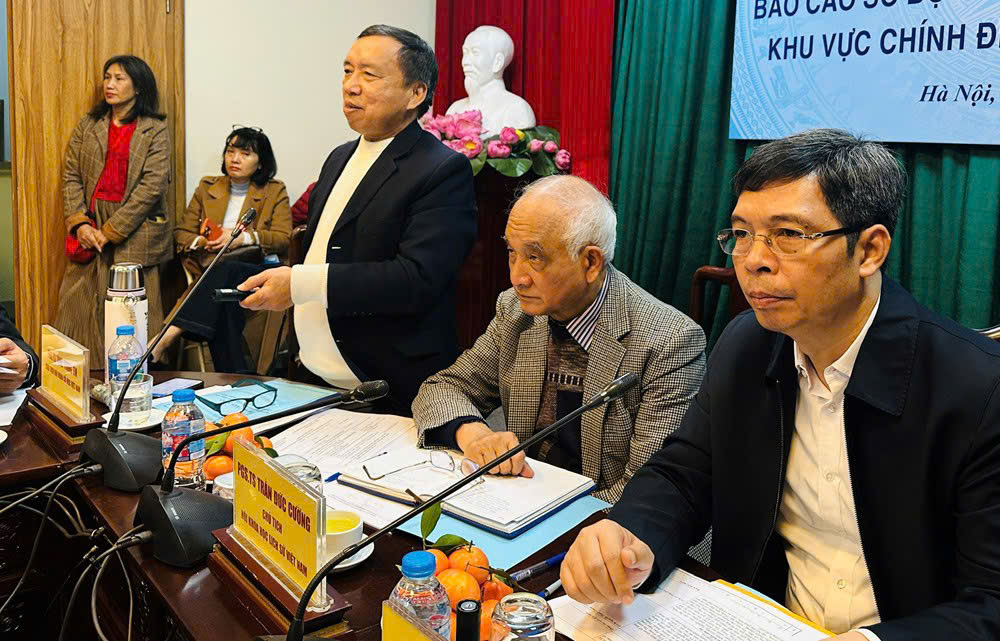
In concluding the workshop, Assoc. Prof. Dr Tran Duc Cuong, President of the Vietnam Historical Science Association, emphasised the following points.
First, the 2025 archaeological excavation was successful and produced a substantial body of new and significant material, contributing to a deeper understanding of the values of the World Heritage Site of the Imperial Citadel of Thang Long – Hanoi across thousands of years of history.
Second, he recommended that archaeological excavation should continue to be expanded, with particular emphasis on enlarging the 2025 excavation area at the foundation of Kinh Thien Palace, in order to provide additional documentation to support research and the reconstruction of Kinh Thien Palace and its ceremonial space.
Third, he noted that achieving comprehensive research outcomes on Kinh Thien Palace and its ceremonial space requires prioritising archaeological excavation and historical research, alongside continued interdisciplinary studies integrating archaeology, history, culture, museology, conservation, architecture and fine arts.
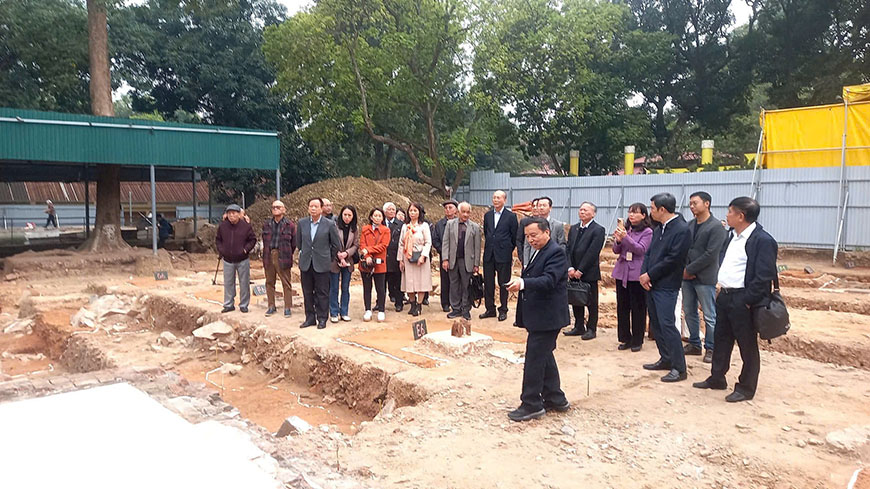
Selected images from the 2025 archaeological excavation at the foundation area of Kinh Thien Palace:

The editorial board